
Grow Your Focus & Rebuild Your Attention Span

Attention! —Where has your’s gone?
How is your attention span these days? If you find your mind wandering constantly, or if you feel a compulsive urge to check your phone every few minutes, you are far from alone. In our modern digital landscape, the world pulls our attention in countless directions, leaving many of us feeling unanchored, scattered, and deeply overwhelmed.
Too much of life is being chopped up and served to us in 9-second bites. But a truly fulfilling, meaningful life cannot be lived that way. We need deep focus to create, to connect, and to thrive.
If you feel like your ability to concentrate is broken, I want to assure you that it can be fixed. Your attention span is like a muscle. If you stop using it, it atrophies, and if it gets trained to be short and chaotic, it will be. (And by training, I mean the process of your mind naturally adapting to the constant barrage of stimuli of daily life.) But with the right holistic approach, intentional practices, and a bit of patience, you can absolutely strengthen it.
Complication is easy; simplicity, however, is actually hard. Rebuilding your focus requires going slow and being gentle with yourself. You are stretching and exercising your cognitive endurance, and you need to treat it accordingly—just like a good workout at the gym. And just like working out and exercising your body, there are no quick fixes or 1-and-done solutions. Play the long game.
Drawing on principles of mental wellness and behavioral design, here is a foundational, step-by-step framework to help you reclaim your focus, build your attention span, overcome distractions, and train your brain to concentrate on what truly matters.
Step 1: Find Your Baseline (The Starting Line)
Before you can start a new workout regimen at the gym, you have to know what you can do, how much weight you can lift, and how long you can lift it. The same principle applies to your mental wellness and cognitive focus. To rebuild your attention, you first need to establish your baseline.
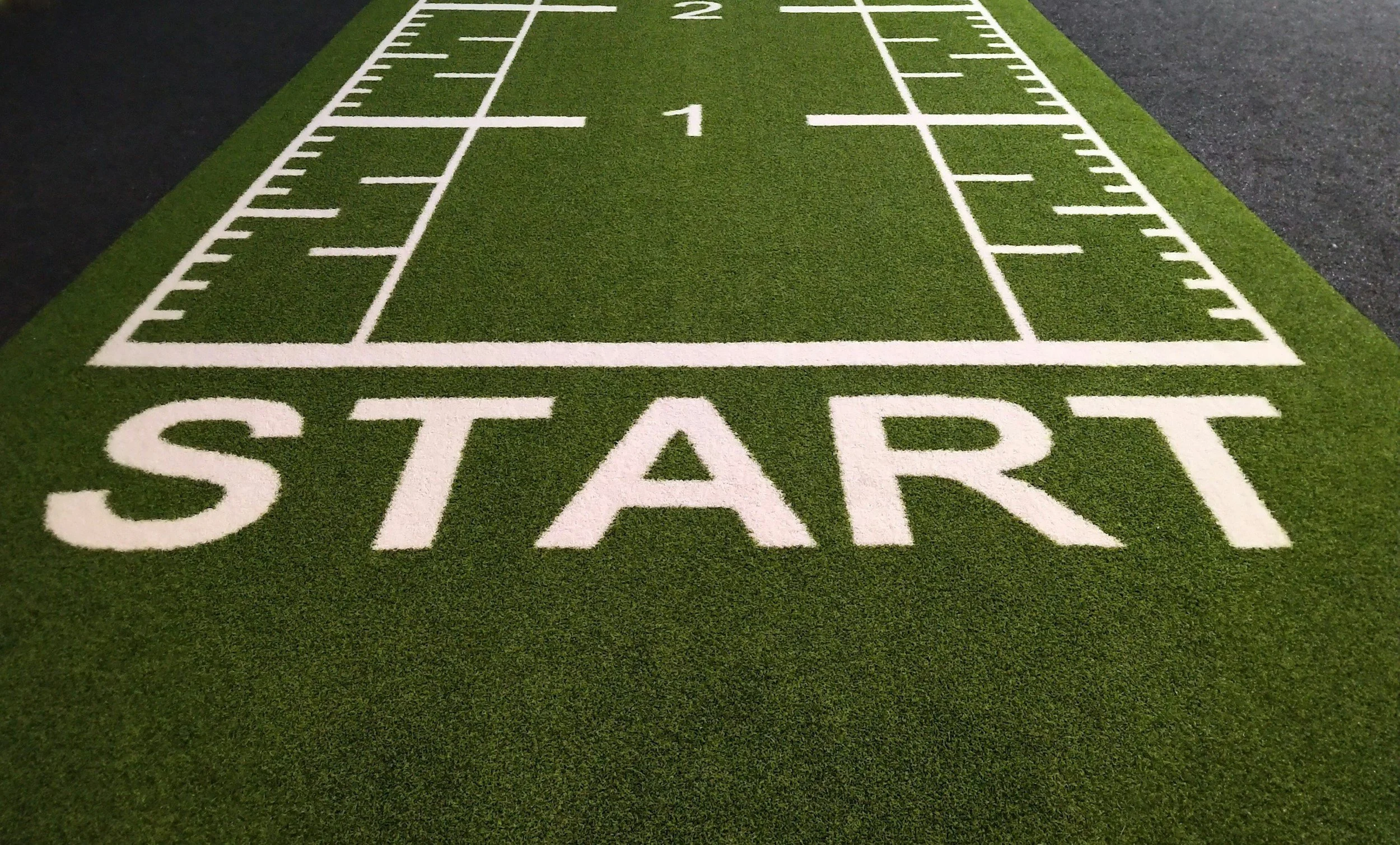
Do you know how long your attention span actually is? Start by figuring it out.
Here is your first exercise: Sit down with something to read—a physical book or a long-form article—and time yourself. Do not use your phone; use a medium that doesn't have built-in notifications.
How long can you read without getting up, feeling restless, or feeling the overwhelming urge to do something else (like checking your phone or opening your computer)?
When that urge hits, look at the timer and write that number down. That is your baseline. Do not judge this number—it’s just information. Whether it is 45 minutes or 45 seconds, it is simply data. It is the starting point for your new mental workout. Your goal moving forward is to gently and incrementally make that number increase over time.
Step 2: Eliminate Distractions (Take Back Your Power)
We live in what psychologist and economist Herbert A. Simon famously dubbed the "Attention Economy." In a world rich with information, human attention is the ultimate scarce resource. Major tech companies spend billions of dollars employing behavioral scientists to figure out how to hijack your focus and keep your eyes glued to their platforms.
Don’t give corporations power over you by submitting to their engineered distractions. You have to take your power back by intentionally designing an environment that supports your mental clarity. Willpower alone will not win out. Instead, rely on environmental design. Minimize "attention leeches" before you even sit down to work.
How to Engineer a Distraction-Free Environment:

A cluttered space can lead to a cluttered (and thus, unfocused) mind.
Create a "No Phone Zone": When it is time to do deep work or focus, put your phone in another room. The mere physical presence of a smartphone on your desk—even if it is turned off—has been shown to reduce cognitive capacity.
Silence All Notifications: Turn off the pings, buzzes, and pop-ups on your computer and smartwatches. You dictate when you check your messages—not the other way around; your devices should not dictate your focus.
Close Irrelevant Tabs: Before you begin a task, close all computer tabs that are not directly related to the work at hand. Visual clutter creates mental clutter.
Clean room, clean mind: Just like the tabs on your computer, the same thinking applies to the physical space you are in. Visually and physically shift, clean, or create a space that is clutter free. A wild colored, fully filled room isn’t a great idea, but also a bare-walled, white room is to far in the opposite direction as well.
Step 3: Create a Focus Ritual (Cue Your Brain)
I am a big ritual guy. I love them. And in the context of mental wellness and productivity, rituals are incredibly helpful.
Our brains operate on pattern recognition. When you create a specific ritual around your work, you are utilizing classical conditioning to send a powerful signal to your nervous system. You are creating a cue that tells your brain, "It is time to transition into focus mode."

A starting ritual is a cue that signals greater focus for your mind.
The specific action you choose for your ritual does not actually matter. Consistency is what matters. It is the repetition of the act that trains your mind to shift operations towards greater focus.
Ideas for Your Focus Ritual:
Light a specific candle at your desk right before you begin working, and blow it out the moment you are done.
Sit in a dedicated space. Have a specific chair or a certain corner of the room that is solely devoted to focused work. Never use this space for scrolling social media or lounging.
Do a specific physical stretch or movement with your body to kick off your focused time.
Recite or say a short phrase, mantra, or intention before opening your laptop.
Make an actual event out of starting and stopping. Have a clear, definitive "start" and a clear, definitive "stop" to your workflow.
By ritualizing your workflow, you reduce the friction of getting started, and you cue your brain to naturally start focusing. Over time, simply lighting that candle or sitting in that specific chair will naturally induce a state of greater concentration.
Step 4: Leverage Breaks and Movement (Work With Your Brain, Not Against It)
A common misconception in the hustle culture of the modern workplace is that pushing yourself to the point of exhaustion is a badge of honor. It isn't. That sort of behavior is essentially a decision to make your life worse. Pushing until you are fried is counterproductive and harmful to your long-term mental wellness. It is not heroic to work in ways that are ultimately unhelpful.
Studies have shown that the human brain operates in cycles known as ultradian rhythms. These are natural cycles of energy production and depletion that occur throughout the day. Because of these rhythms, 90 to 120 minutes seems to be the maximum amount of time your mind can sustain productive focus before it needs an interruption to stay fresh and effective.

Focus and attention is all about sitting still—part of the answer is movement.
Think of your brain like a toddler. If a toddler doesn't get their naps and their snacks, they get cranky, their behavior degrades, and they turn into a mess. Your brain is the same way. You have to work with yourself, not against yourself, and give your mind and body what they need, when they need it.
How to Build Recovery into Your Workflow:
The 90-Minute Rule: Every hour to 90 minutes, literally step away from your work.
Move Your Body: When you take this break, get up and physically move for at least 5 minutes. Stretch, walk around the block, or go get a glass of water.
Physiological Reset: Physical movement physiologically helps your body support your mind. It increases blood flow to the brain, which naturally helps you focus when you sit back down. (These little movement breaks also reduce cortisol—amongst other things—that help with stress—which, in turn, also helps with attention and focus.)
Remember, this isn't "stopping work"—this intentional recovery is an active, vital part of your workflow designed to ensure that you are at your best over the long term.
Step 5: Reconnect Your Attention to Meaning (The Secret Ingredient)
Finally, we arrive at the most crucial—and often most overlooked—component of sustaining attention: Meaning.
When we are faced with a tedious task, our brains naturally look for an escape route. To keep your attention anchored, you have to connect meaning to whatever it is you are trying to focus on. Focus naturally increases when we have internal buy-in, and we create that buy-in when we articulate the why behind our actions.
Finding meaning in what you are doing is not some "woo-woo," esoteric concept. It is a tangible, highly effective hard skill. Purpose fuels performance. The greater the purpose, the better your performance and cognitive endurance will be.
Before you start a difficult task, literally ask yourself:
Why does this task matter? * Who benefits from me completing this, and why?
How does this fit into my larger goals (or potentially, the well-being of others)?
Take a moment to verbally articulate or write down your response. For example, balancing a stressful spreadsheet might not seem meaningful on the surface. But if you connect that spreadsheet to the financial security of your family, or the success of a project you care about, the nature of the work shifts.
Meaning turns a chore into a choice. And where choice goes, focus naturally follows. Where there is meaning, your brain stops fighting the task and starts engaging with it.
Start the Long Game Today
Our attention spans are under constant siege, but they are not completely lost to us. By finding your baseline, eliminating distractions, building consistent rituals/cues, honoring your body's need for movement, and (especially!) anchoring your work in meaning, you can absolutely reclaim your focus and attention span.
I would love to hear from you as you begin this process. Try the reading test I mentioned in Step 1. How long were you able to focus before your mind wandered? Be honest with yourself, embrace where you are starting, and begin the gentle work of lifting those cognitive weights.
Are you ready to take your mental wellness, focus, and personal growth to the next level? Sometimes, rebuilding our mental frameworks requires more than just reading an article; it requires a dedicated partner. If you are struggling with overwhelm, feeling unanchored, or looking to optimize your mental clarity and overall well-being, you don't have to navigate it alone.
I help individuals cut through the noise, build sustainable habits, and reconnect with their deepest purpose. Reach out to schedule a consultation, and let's work together to design a life of intention, focus, and profound meaning. Be well!
References & Further Reading
Ericsson, K. A., Krampe, R. T., & Tesch-Römer, C. (1993). The role of deliberate practice in the acquisition of expert performance. Psychological Review, 100(3), 363–406.
Note: This foundational study explores how elite performers (from athletes to musicians) structure their work into 90-minute blocks followed by necessary recovery, validating the concept of working with our natural ultradian rhythms.
Pang, A. S.-K. (2016). Rest: Why you get more done when you work less. Basic Books.
Note: This book compiles extensive research on the necessity of taking breaks, physical movement, and building physiological recovery into a workflow to sustain long-term cognitive focus.
Simon, H. A. (1971). Designing organizations for an information-rich world. In M. Greenberger (Ed.), Computers, Communications, and the Public Interest (pp. 37-52). The Johns Hopkins Press.
Note: Herbert A. Simon, a Nobel laureate, first coined the concept of the "Attention Economy," noting that a wealth of information naturally creates a poverty of attention.
Steger, M. F., Dik, B. J., & Duffy, R. D. (2012). Measuring meaningful work: The Work and Meaning Inventory (WAMI). Journal of Career Assessment, 20(3), 322-337.
Note: This research highlights how finding meaning in one's tasks directly correlates with increased psychological well-being, engagement, and sustained performance.
Ward, A. F., Duke, K., Gneezy, A., & Bos, M. W. (2017). Brain drain: The mere presence of one’s own smartphone reduces available cognitive capacity. Journal of the Association for Consumer Research, 2(2), 140-154.
Note: This is the landmark study demonstrating that having a smartphone in your physical environment—even if it is powered down and face down—measurably drains your cognitive capacity and focus.
Wood, W., & Rünger, D. (2016). Psychology of habit. Annual Review of Psychology, 67, 289-314.
Note: An excellent review of the literature on how environmental cues and classical conditioning form the basis of behavioral rituals, lowering the mental friction needed to begin a task.