
The Myth of the 8-Hour Sleep (Part 1): Why Waking Up at Night Doesn't Mean You're a Bad Sleeper
I hear some version of this sentence almost every week: "I woke up at 2am and just laid there for an hour. Something's wrong with me.”
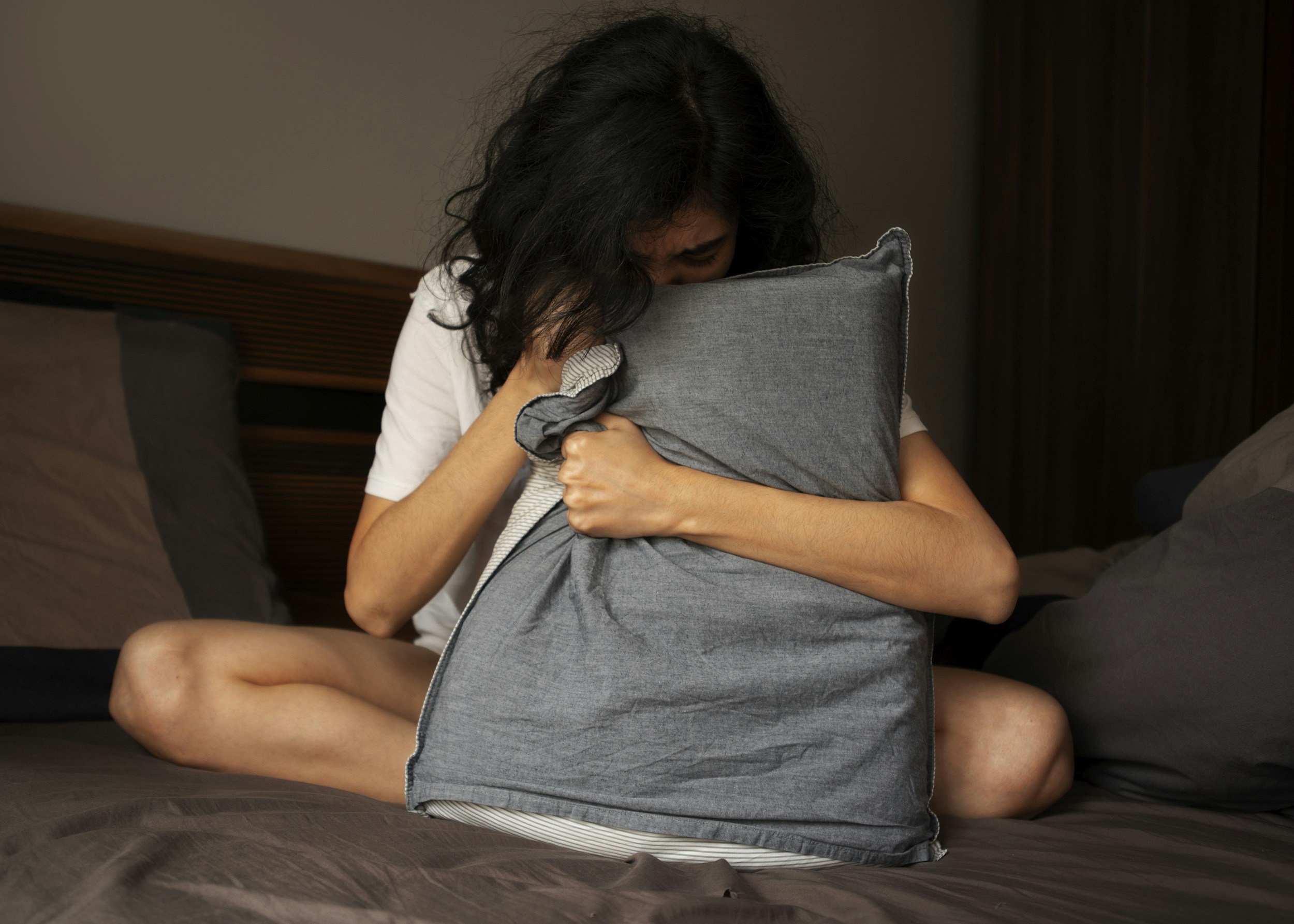
We tend to pathologies and judge waking up in the night, but its FAR more normal than you might think.
We've been told, over and over, that a good night’s sleep is a single, solid, unbroken block of eight hours—from lights out to alarm clock, no interruptions. So when our body or mind doesn't do that, it feels like proof of a problem. We’ve failed, and we’re not good sleepers.
But here's the thing. That’s just not true—on any level. First of all, the notion that we all need eight hours of sleep is a myth (one I’ll unpack in another article). Secondly, judging yourself and convincing yourself that you're bad, a failure, or that you have a problem is the fastest way to insure that those thoughts become true (another article on its way). And third, (and perhaps most importantly) for the vast majority of human history, sleeping straight through the night was not normal. It was actually unusual. In fact, what we now label as unhealthy used to be rather helpful.
A Forgotten Pattern: First Sleep and Second Sleep
Historian, professor, and author, A. Roger Ekirch spent over a decade digging through diaries, court records, medical texts, and literature from Homer's Odyssey to sixteenth-century French physicians, and he found something that humanity seems to have forgotten. Before the widespread use of artificial light (i.e. before the industrial revolution), people routinely slept in two distinct intervals each night, a "first sleep" and a "second sleep," separated by a period of quiet wakefulness that could last an hour or more. This wasn't rare, problematic, or pathological. It was simply how people slept.
People typically went to bed within an hour or so of sunset, slept for roughly four-ish hours, woke up, remained awake for an easy hour or two, and then returned to sleep for another four-ish hours or so until sunrise. That waking window in the middle of the night wasn't wasted time or a symptom to manage. People didn’t lay in bed agonizing over their wakefulness, instead they used it to their benefit: they got up to tend a sick child, said prayers, thought about their dreams, had a low-key conversation with their spouse or family, checked to make sure everything was secure, or simply lay or sit in the dark in a calm, unhurried state of mind. The entire thing was just an ordinary, unremarkable part of being human.
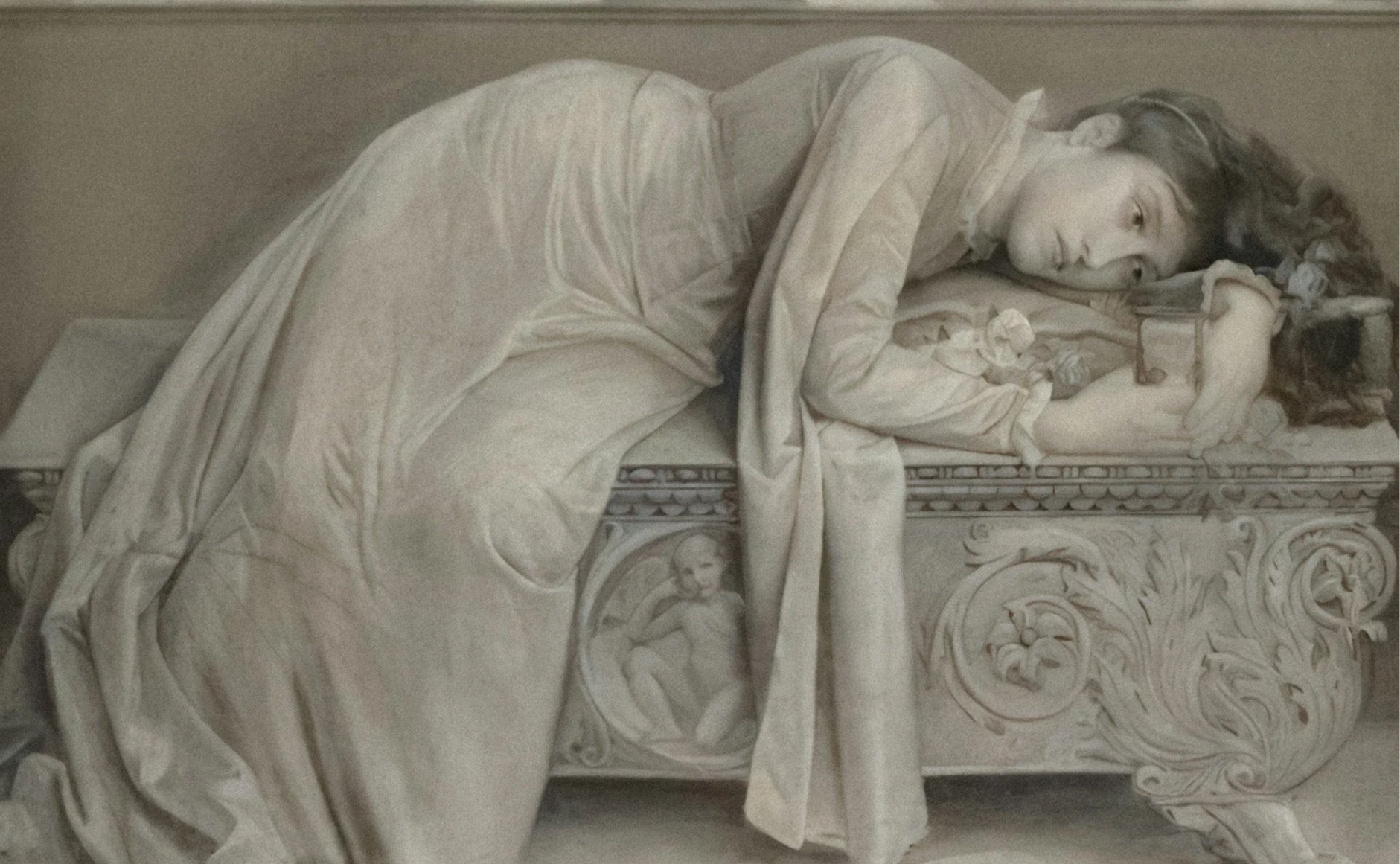
In the years before the industrial revolution, waking up in the night was entirely normal.
Nobody in the 1600s (or in the thousands of years of human history before that) was lying awake at 2am, emotionally spiraling about whether they'd "ruined" their sleep for the week. They just got up, did something quiet, and went back to bed.
And honestly, sleeping in shifts makes evolutionary sense. Before humanity had homes with doors, it probably wasn’t a great idea to be unconscious for a solid 7-9 hours a day. A lot can happen in that span of time. A flock or needed animal could wander off never to be seen again, some kind of danger could ruin you in all sorts of ways. Sleeping in shifts—especially in a small group or family system better enabled people to keep watch and insure safety.
This Wasn't Just a Cultural Habit. It Shows Up in the Body.
Interestingly, this isn’t just something we observe in history. It appears in our physiology as well. In the early 1990s, psychiatrist Thomas Wehr ran an experiment at the National Institute of Mental Health. He placed a group of healthy volunteers in an environment with fourteen hours of darkness a day, roughly what people would have experienced in winter before widespread artificial lighting, and let them sleep as much as they wanted.
When modern people are given enough uninterrupted darkness, many naturally drift back toward segmented sleep.
By the fourth week, the subjects had settled into sleeping about eight hours a night, but not in one block. Instead, their sleep organized itself into two distinct segments. They would lie awake for an hour or two, fall asleep quickly, sleep for three to five hours, wake and spend another hour or two in quiet wakefulness, then fall into a second three-to-five-hour sleep period. The onset of each sleep phase was tied to a spike in melatonin, the hormone the brain's pineal gland releases in response to darkness that helps sleep drive and onset.
In other words, when modern people are given enough uninterrupted darkness, without alarm clocks, screens, or streetlights telling their brains it's still daytime, many of them naturally drift back toward the same segmented pattern Ekirch found in the historical record. The biphasic sleep pattern Wehr documented lines up with historical references to segmented sleep going back as far as 800BCE. (Segmented sleep most likely existed long before 800BCE as well, we just don’t have solid record of it.)
So What Changed?
The short answer is us, and the light we’ve brought into this world. Unfortunately, I’m not talking about a metaphysical light of goodness from our hearts. We’re definitely talking about the light that comes from flipping a switch. Ekirch found that by the early nineteenth century, our first sleep had begun expanding at the expense of the second sleep and the waking period between them, a shift that started among the urban upper classes in northern Europe and gradually spread through the rest of Western society over roughly two hundred years. He attributes much of that shift to improvements in street lighting and domestic lighting, along with the rise of coffee houses that stayed open into the night. (Yes, caffeine has been messing with our sleep for a long time.) By the 1920s, the idea of a first and second sleep had disappeared almost entirely from public consciousness. And now, in the span of just two or three brief generations since, the idea of phased sleeping is completely gone from memory.
Electric light didn't just let us stay up later. It effectively edited a piece of our biology out of cultural memory. The segmented pattern didn't disappear because it was unhealthy. It disappeared because we made the unhealthy choice to build a world that no longer had room for it, and then we forgot the room had ever been there.
I should say, in the interest of intellectual honesty, that not every historian agrees on how universal this pattern was. Some recent scholarship has pushed back on how central segmented sleep was to everyday life, arguing the historical record may be more mixed than Ekirch's original thesis suggests. But even the more cautious readings don't dispute the core, practical point I want you to walk away with: waking in the night, on its own, is not new, not rare, and not evidence that something in you is broken.
Why This Matters For Your Sleep
I'm not telling you this history lesson just because it's fascinating, although if you’re a nerd like me, it really really is. I'm sharing all of this with you you because of the emotional weight people carry around waking up at night.
In my client work, one of the biggest obstacles isn't the waking itself. It's what happens in the minutes after. The clock-checking. The math. The beliefs. The internal narrative that says, "I have a sleep problem," which triggers a stress response that makes it genuinely harder to fall back asleep. That's called sleep-related anxiety or conditioned arousal, and it can turn a completely normal biological event into an actual problem.
Knowing that your body may be echoing a pattern that governed human sleep for most of our history can take a lot of the wind out of the sails of your worry and frustrations. You're not failing at sleep. You may simply be experiencing a faint biological memory of first sleep and second sleep, showing up in a world that no longer makes space for it.
That doesn't mean every 2am waking is benign. If you're waking frequently, feeling exhausted during the day, or lying there for long stretches without relief, that's worth looking at with a professional, and cognitive behavioral therapy for insomnia (CBT-I) remains the recommended, first-line treatment for chronic insomnia. But a bit of quiet wakefulness in the middle of the night, on its own, without daytime impairment? History suggests that might just be sleep working the way it was built to.
What to Do With This…
So. If you find yourself waking up tonight, here is what I'd invite you to try:
Don't check the clock. Clock-checking is one of the fastest ways to turn quiet wakefulness into anxious wakefulness.
Don't reach for your phone. Screens signal daytime to your brain in a far more powerful way than candlelight ever did, (and candlelight is effectively where all this began in the first place).
If you’re not back to sleep in half an hour or so, get up and do something non-stimulating in dim light, the way people did for most of human history. Read a book. Sit quietly. Do something that doesn’t require your thought. Try a little meditation.
Trust that your body knows what it's doing, and that falling back asleep doesn't require effort so much as it requires the absence of a fight.

A Closing Thought
Sometimes (almost always) the most helpful thing isn't a new hack. It's context. Knowing that humans slept in two shifts for most of our existence, and that your ancestors likely spent a bit of time doing something quiet and unremarkable in the middle of the night, can be its own form of relief. You're not broken. You may just be sleeping the way humans slept for most of history.
References
Boyce, N. (2023). Have we lost sleep? A reconsideration of segmented sleep in early modern England. Medical History, 67(2), 91–108. https://doi.org/10.1017/mdh.2023.15
Edinger, J. D., Arnedt, J. T., Bertisch, S. M., Carney, C. E., Harrington, J. J., Lichstein, K. L., Sateia, M. J., Troxel, W. M., Zhou, E. S., Kazmi, U., Heald, J. L., & Martin, J. L. (2021). Behavioral and psychological treatments for chronic insomnia disorder in adults: An American Academy of Sleep Medicine clinical practice guideline. Journal of Clinical Sleep Medicine, 17(2), 255–262. https://doi.org/10.5664/jcsm.8986
Ekirch, A. R. (2001). Sleep we have lost: Pre-industrial slumber in the British Isles. American Historical Review, 106(2), 343–386. https://doi.org/10.2307/2651611
Ekirch, A. R. (2005). At day's close: Night in times past. W. W. Norton & Company.
Wehr, T. A. (1992). In short photoperiods, human sleep is biphasic. Journal of Sleep Research, 1(2), 103–107. https://doi.org/10.1111/j.1365-2869.1992.tb00019.x