
3 Unexpected "Supplements" for Better Sleep (Backed by Research)
The Three Unexpected "Supplements" I Actually Recommend for Better Sleep (Spoiler: none of them come in a fancy bottle with a moon on the label.)
If you've spent any time on the wellness side of the internet, you've probably seen an explosion of sleep supplements: magnesium glycinate, apigenin, shwagandha gummies shaped like little bears, and melatonin in doses that would knock out a horse. There's a lot of noise, and some of it is genuinely useful. But when clients ask me what they should be taking for sleep, my answer usually surprises them, because it has almost nothing to do with what's in a supplement aisle.
The three things I recommend most often are a daily multivitamin, water, and sunlight. Not glamorous. Not going to sell out on TikTok. But they're the foundation that everything else (including the fancier interventions) sits on top of. Let's walk through why.
1. A Daily Multivitamin (With an Honest Caveat)
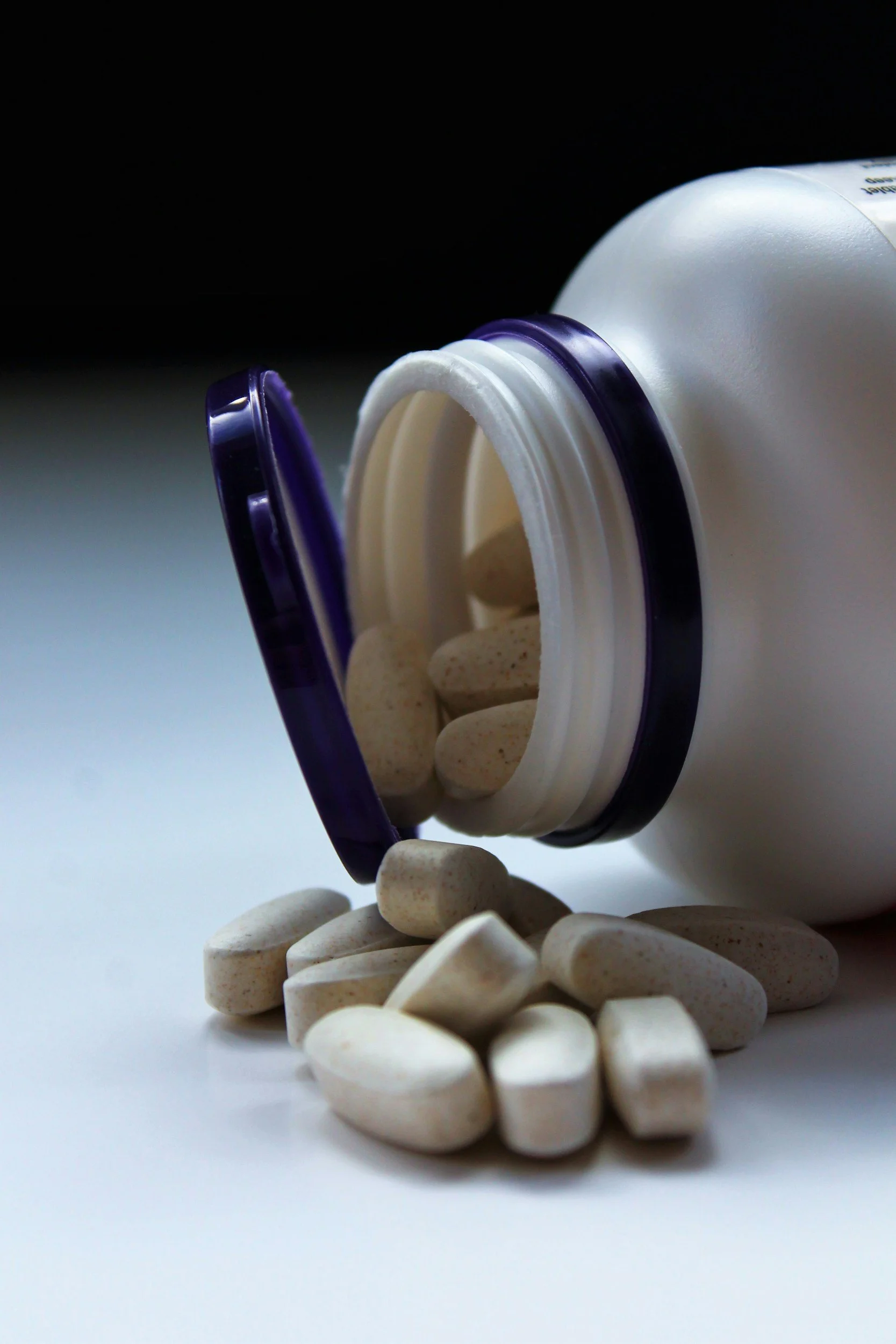
A simple, daily multivitamin would resolve your sleep troubles directly, but it can help establish baseline wellness from which your body can begin to improve your sleep and rest.
To be honest: the direct research on multivitamins and sleep is mixed, and I'm not going to pretend otherwise. A few studies have actually found that people who take a multivitamin report more nighttime awakenings and worse sleep maintenance than non-users. That being said, however, other research tells a more encouraging story. One 2018 study presented at the SLEEP Annual Meeting found multivitamin users were significantly less likely to report either very short (under 5 hours) or very long (over 9 hours) sleep durations—both of which are associated with worse long-term health outcomes. And a broader review of dietary supplements found that certain micronutrients, alongside amino acids and vitamin D, showed meaningful benefits for sleep quality, (although researchers have called for more rigorous trials.
So where does that leave us? As someone who works with the whole person rather than a single symptom, I tell my clients that a multivitamin isn't a sleep aid—it’s more like insurance. Even if we think or believe that we eat well, we often miss the mark with the full range of nutrients we need for optimal health. If your diet is inconsistent, low in variety, or heavy on convenience foods, your body may be quietly running short on micronutrients (like magnesium, B vitamins, vitamin D) that are involved in regulating mood, stress response, and yes, sleep architecture. My advice is simple: either get serious and consistent about eating a genuinely balanced, clean, diverse, whole-food diet, or take a reasonable daily multivitamin to close the gap. And when it comes to finding a good multivitamin, find one that is third party tested for label accuracy, contain as few additives as possible, and have responsibly sourced ingredients.
2. Water (Timed Correctly)
This one sounds almost too simple, but hydration is one of the most overlooked tools in sleep health. Most people worry about drinking water before bed, when the real conversation should be about hydration throughout the day.
Let's deal with the obvious first: yes, chugging a large glass of water right before bed is a reliable way to guarantee a middle-of-the-night bathroom trip. Research on evening hydration habits has found that fluid intake within two hours of bedtime is associated with more nighttime awakenings and nocturia (having to urinate at night or while otherwise asleep), and the recommendation coming out of that research is to front-load your hydration earlier in the day and taper off in the evening. That much is common sense.

Hydration throughout the day helps regulate your body and also regulates your sleep architecture. Dehydration, on the other hand, can cause a host of issues that worsen sleep.
What's less obvious is how much your daytime hydration status affects your sleep quality overall. One study using wearable sleep sensors found that overall fluid intake correlated positively with REM sleep length, total sleep duration, and sleep efficiency—meaning the water you drink at 10 a.m. may do more for your sleep tonight than you realize. Other research backs this up from a different angle. Dehydration has been linked to increased cortisol, the body's primary stress hormone, which in turn can disrupt sleep patterns. Dehydration also leads to cardiovascular stress and irregular heart rates which stress the body and interfere with sleep. Proper hydration, however, supports the body's natural sleep-wake regulation. A cross-sectional study of hydration and sleep quality similarly found that adequate daily water intake was associated with better subjective sleep quality, shorter time to fall asleep, and higher sleep efficiency.
The practical takeaway I give clients: drink well and consistently across the morning and afternoon, and let your intake naturally taper in the two hours before bed. Your body regulates your temperature, hormone balance, cardiovascular and nervous system activity more efficiently when it's properly hydrated. And, a well-regulated body is a body that can sleep better.
3. Sunlight (Yes, Actual Sunlight)
Of the three, this one is the most directly impactful for sleep. The science behind sunlight exposure is some of the most consistent and well-established sleep research we have. And, while we don't typically think of sunlight as a "supplement," functionally, that's exactly what it is: a daily input your body needs in the right dose and at the right time to run properly.

Sunshine is the key driver of sleep architecture and sleep drive in our bodies. Getting a good dose of it first thing in the morning is key to good sleep.
Your sleep-wake cycle is governed by an internal clock (your circadian rhythm) and that clock is set primarily by light exposure. Getting some morning light increases healthy cortisol levels, and exposure to outdoor sunlight throughout the day is linked to improvements in sleep quality, hormone regulation, and overall mood. Even more specifically, a single thirty-minute session of bright light exposure immediately after waking has been shown to be sufficient to advance and stabilize circadian rhythms. What’s more, this morning does of sunshine results in better sleep quality, faster sleep onset, and longer sleep duration. That's a remarkably small investment for a very meaningful physiological effect. What’s more is that light exposure across the day helps suppress melatonin appropriately during your waking hours, so that melatonin can rise naturally in the evening and ease you into sleep (when you should naturally be sleepy).
Practically, this means that getting outside within the first hour of waking, even for ten minutes, will do you wonders. Also, look for a few more "doses" of natural light throughout the day—a walk at lunch, sitting outside for a phone call, tending to your garden in the late afternoon. You're not trying to get a tan. You're training your internal clock to know the difference between day and night, which is a skill your body may not be as good at as you think (given how much time we spend indoors, under artificial light).
The Real Point Behind All Three
None of these strategies are sexy. It’s really difficult to effectively “brand” the basic tenants of health and wellness; especially when people seem more interested in spending $75 for a Himalayan miracle fungus than $0 for a 10 minute walk outside. But real, sustainable sleep improvement rarely comes from a single flashy intervention. Instead, it comes from a relatively small network of unglamorous, consistent habits that support your body's own regulatory systems.
This is also, honestly, the same philosophy that runs through everything I do in my practice. Especially when we're talking about sleep, small, consistent, evidence-informed choices outperform big, dramatic ones over time. Admittedly, it's not the most exciting sales pitch, but it's the one that actually works. If you've been struggling with sleep and want support building a plan that's tailored to your actual life, reach out. I offer counseling and help based in CBT-I (cognitive behavioral therapy for insomnia, a structured, research-backed approach). It’s the gold-standard for resolving sleep trouble, and it can help you get the rest you deserve.
Be well.
Adam Scheldt is a holistic counselor, and CBT-I based sleep counselor based in Kenmore, New York, serving clients in person and online. Learn more at adamscheldt.com.
References
Aristotelous, P., Aphamis, G., Sakkas, G. K., Andreou, E., Pantzaris, M., Kyprianou, T., Hadjigeorgiou, G. M., Manconi, M., & Giannaki, C. D. (2019). Effects of controlled dehydration on sleep quality and quantity: A polysomnographic study in healthy young adults. Journal of Sleep Research.
Ji, X., & Grandner, M. A. (2018, June). Multivitamin use and sleep outcomes in a national sample of US adults [Conference presentation]. SLEEP 2018, Annual Meeting of the Associated Professional Sleep Societies, Baltimore, MD.
Lichstein, K. L., Payne, K. L., Soeffing, J. P., Heith Durrence, H., Taylor, D. J., Riedel, B. W., & Bush, A. J. (2007). Vitamins and sleep: An exploratory study. Sleep Medicine, 9(1), 27–32. https://doi.org/10.1016/j.sleep.2006.12.009
Liu, Y., Chen, X., & Wang, S. (2025). Impact of hydration habits before bedtime on sleep quality. Sleep Science and Practice, 9(1). https://doi.org/10.1186/s41606-025-00169-0
Menezes-Júnior, L. A. A., Sabião, T. S., Carraro, J. C. C., Machado-Coelho, G. L. L., & Meireles, A. L. (2025). The role of sunlight in sleep regulation: Analysis of morning, evening, and late exposure. BMC Public Health, 25, 3362. https://doi.org/10.1186/s12889-025-24618-8
Pan American Health Organization contributors. (2025). Morning light exposure: A potential modifier of cardiovascular risk factor. ScienceDirect.
Rebello, J., & Torres, M. (2025). Plain water intake, sleep quality, and hydration status of pregnant women in Hainan, China: A cross-sectional study. PMC.https://www.ncbi.nlm.nih.gov/pmc/articles/PMC11175051/
Ren, H., Zhu, B., & Lin, C. (2021). Efficacy of dietary supplements on improving sleep quality: A systematic review and meta-analysis. Sleep Medicine Reviews.https://pubmed.ncbi.nlm.nih.gov/33441476/
University of Arizona College of Medicine – Tucson, Sleep and Health Research Program. (2025). Effects of fluid intake on sleep duration and quality among healthy adults. PubMed.https://pubmed.ncbi.nlm.nih.gov/40330587/
sleep coach Buffalo NY, CBT-I sleep coaching, natural sleep supplements, improve sleep quality naturally, holistic sleep support