
The Myth of the 8-Hour Sleep (Part 2): How Much Sleep Do You Actually Need?
Almost every client who walks through my door has a number stuck in their head. And it’s almost always eight. Eight hours of good, solid sleep—anything less means something isn’t right.
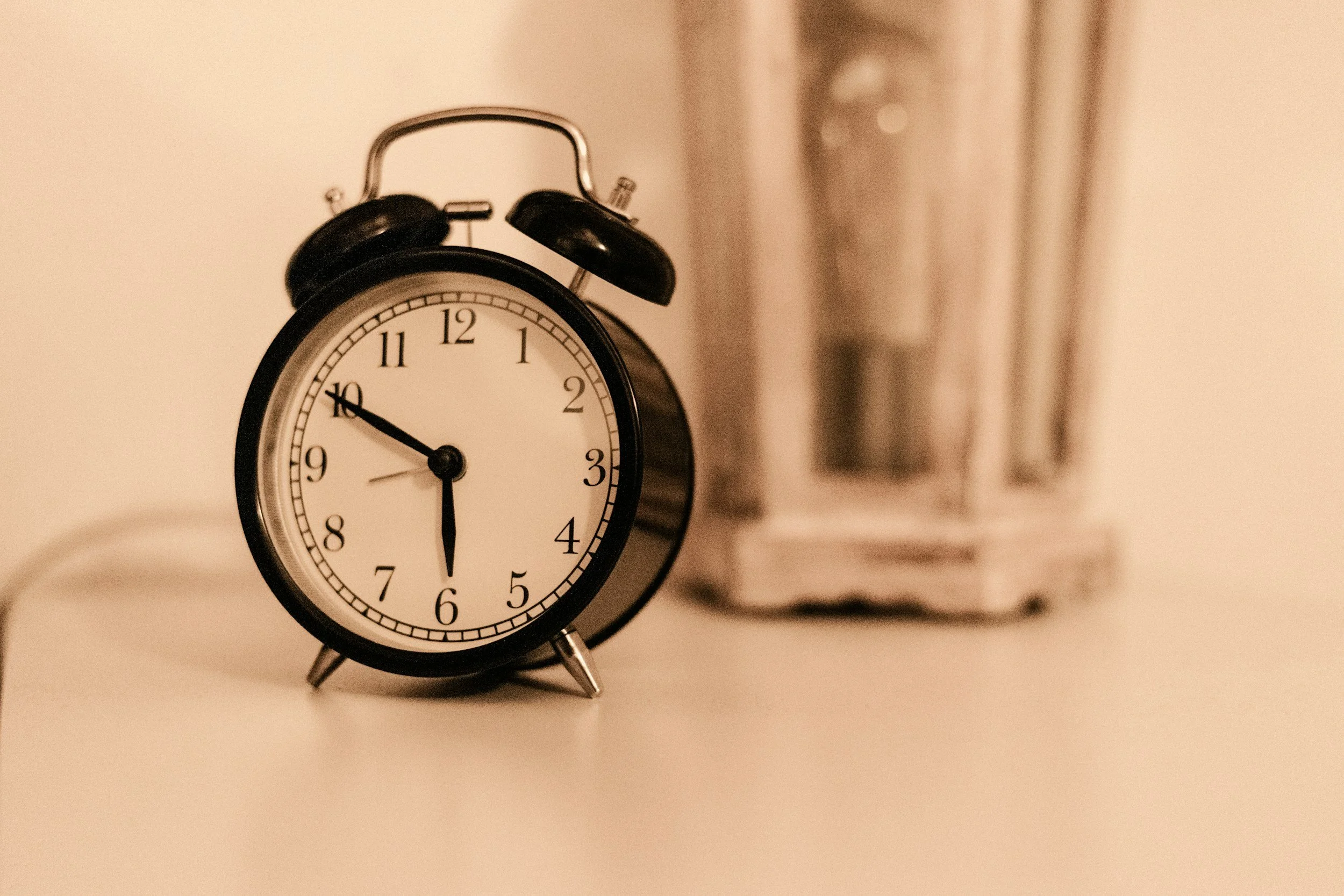
Eight hours was never meant to be a universal prescription.
I've had people worry about only getting seven and a half. I've watched others force themselves to lie in bed for an extra hour they didn't need, just to try and hit the magic number eight (they often end up more frustrated and more awake and still don’t hit that eight hours).
Eight hours was never meant to be a universal prescription. It's a loose average drawn from a wide range factors. And treating it as a hard and fast rule to meet every single night can actually work against your sleep (no matter the amount) rather than for it.
Where "Eight Hours" Actually Comes From
The number isn’t completely arbitrary, but it's also not as precise as we've come to treat it. In 2015, the National Sleep Foundation convened an eighteen-member panel of experts across sleep medicine, pediatrics, neurology, gerontology, and related fields to review the scientific literature and issue updated sleep duration recommendations. What they landed on for most healthy adults, ages eighteen to sixty-four, was a range of seven to nine hours (which includes, but is certainly not limited to… eight). They explicitly noted that sufficient sleep varies not just across the our lifespan but from person to person, and that sleeping somewhat outside that range isn't necessarily unhealthy, it's simply less common. That's a significantly and meaningfully different message than the one that we’ve drilled into our minds.
Sleep Outside Your Body's Actual Need Isn't Healthy Either
Hitting the bullseye for our personal best sleep amount is tough. If we wanted to be a bit cliche, we might say that it’s more of an art than a science. Not just because it’s necessarily difficult to pin point, but because it changes over time—both as we progress through life, but also from day to day based on activity, health, stress, and more.
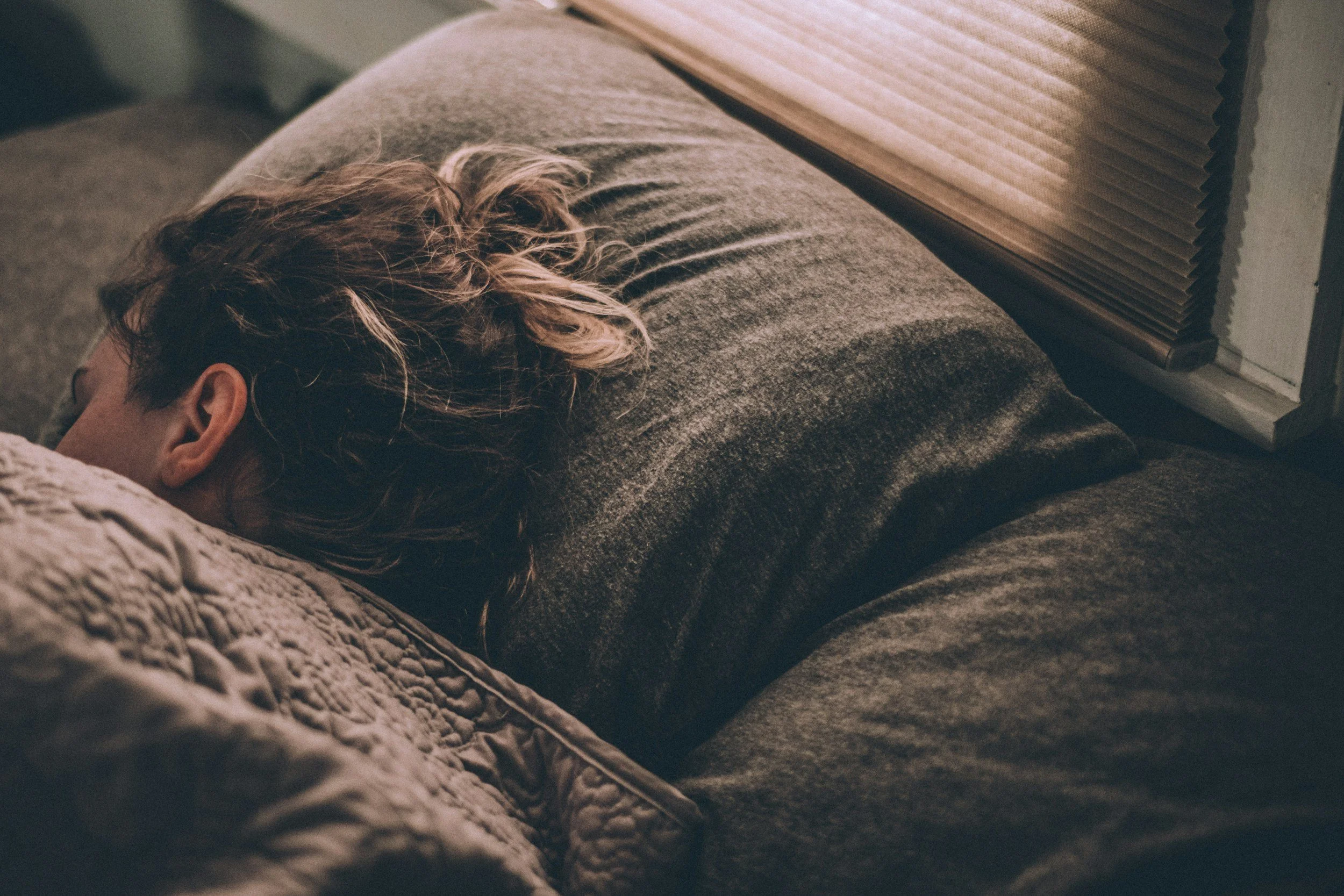
Surprisingly, too much sleep can be just as bad for you as too little.
Being sleep deprived is awful—that much is self-evident. But, something that often surprises people is that more sleep is not automatically better. Researchers have found a U-shaped relationship (think, an inverted bell curve) between sleep duration and health risk, meaning the lowest risk sits in the middle of the range, and risk climbs at both ends (the ends being either getting too little or too much sleep). A large systematic review and meta-analysis of prospective studies found that short sleep duration was associated with an increased risk of death, but so was long sleep duration.
Despite how dire that sounds, there is no need to be deeply alarmed (worry about sleep is really not helpful). Rather, it’s just more information for us to work with, and more reason for us to gently aim ourselves toward our sleeping “sweet spot.” If you naturally wake up refreshed after seven hours, then great. That’s all you needed. And, forcing yourself to stay in bed for nine isn't banking extra health. It may end up being time spent in a lighter, more fragmented state that leaves you feeling groggier, not better rested. The goal isn’t a specific number. It's a general amount that matches what your particular body and brain need to function and feel well.
What Actually Determines How Much Sleep You Need
Individual sleep need is shaped by more factors than most people realize, and most of them are outside your control:

Genetics, age, activity, and more actually determine how much sleep you need to feel refreshed and be healthy.
Genetics play a real and measurable role. In 2009, researchers led by Ying-Hui Fu at the University of California San Francisco identified a mutation in a gene called DEC2 in a family of lifelong "natural short sleepers.” (They feel fully rested on roughly six hours a night without any lack of function or feeling sleep deprived.) The mutation affects a hormone called orexin that regulates wakefulness. This population is rare, and I want to be clear that most people who sleep only six hours are not secretly one of these genetically short sleepers, they've simply become accustomed to a detrimental lack of sleep. But, the discovery proved something important: baseline sleep need itself is, in part, written into our biology, not just our habits.
Age changes your sleep architecture substantially over your lifetime, and not in a way you can change or alter. A large meta-analysis reviewing sleep across the human lifespan found that slow-wave sleep, the deep, restorative stage, declines steadily with age, while lighter stages and nighttime awakenings increase. Total sleep time and sleep efficiency both trend downward from childhood into older adulthood, with the most pronounced changes occur during midlife (before leveling off after sixty). This is a major reason a twenty-five-year-old and a sixty-five-year-old can have very different relationships with the same seven hours in bed. It's not that older adults have a problem, rather, their sleep is architecturally different, often lighter and more fragmented by design, not by dysfunction.
Physical activity, illness, stress, and recovery needs all shift sleep in the short term. Your body asks for more sleep when it's fighting an infection, healing from an injury, or under unusual physical or emotional load, and less when things are calm and steady. Generally, it is VERY wise to keep a regular sleep-wake schedule. Going to bed and waking up at the same every day (yes, even on weekends) is always good for you—except, when you are sick, under mountains of stress, or you need greater recovery time from something. In instances like these, my advice shifts towards listening to your body, noting if your mind feels foggy or sleepy, and then adjusting your bed time to enable more sleep. I would add, that in my practice, when clients fall into this category, there are a number of recommendations I make to insure that rest and restorative activities can be done during the day (and especially evening) to help insure that sleep and recovery is at its best.
Sleep debt matters too, but not in the way you might think. If you've been shortchanging your sleep for weeks, your body may need extra recovery sleep for a period before it settles back into its true baseline. This is why sleep researchers doing baseline studies often let subjects sleep freely for several nights before measuring their "natural" need, the first few nights can sometimes be about repayment, not baseline representation of actual sleep patterns.
How Sleep Need Shifts as You Age
One more quick note about sleep and age (because it's really one of the most under-discussed parts of this conversation): it is normal, not pathological, for sleep to become lighter and more broken up as you move through your forties, fifties, and beyond. Many of my older clients come in convinced that the two or three nighttime awakenings they now experience are new evidence of a sleep disorder, when the research suggests this is a well-documented, near-universal pattern of biological aging. That doesn't mean every change in sleep as we age should be shrugged off, some absolutely warrant a closer look, but the presence of lighter, more fragmented sleep in a healthy seventy-year-old is not automatically the same thing as insomnia.
So How Do You Find Your Actual Number?

How can we hit the bullseye when it comes to getting exactly the right amount of sleep?
Let’s get down to brass tacks (and honestly, this is probably a big reason that you chose to read this article). How exactly do you figure out how much sleep is optimal for you? In an ideal world, you’d start with tracking your sleep for two weeks without an alarm. Note what time you naturally fall asleep and what time you naturally wake up, without external pressure. Unfortunately, this isn’t really a possibility for many of us—but don’t worry, we’ll get there! Expect the first several nights to reflect sleep debt, not your true need. If you've been running short for a while, you may sleep unusually long at first. Once your wake-up time stabilizes and starts happening around the same hour without an alarm, for several nights in a row, that stabilized number is a much better estimate of your actual sleep need than any generic guideline.
That is an ideal way to sort out how much sleep you generally need. But, as I mentioned before, (and as is probably very obvious), taking a few weeks off to observe your sleep needs isn’t in the cards for most of us. Anyone with a job doesn’t really have that kind of luxury. BUT, knowing the ideal process does enable us to understand what the general parameters are for some good analysis. So, if taking a few weeks isn’t in the cards, start noticing how you are during the day.
Pay attention to daytime function, not just hours logged in bed. Are you alert without needing caffeine to function? Can you concentrate through an afternoon meeting? Do you feel a genuine sense of restoration, not just an absence of exhaustion? Do you feel refreshed? And if so, how long does that last? How do you feel when the sun goes down? And the most important part, what was your sleep like when you felt (or didn’t feel) all these things? Start to build a log of exactly how you are feeling vis a vis how much sleep you got the night before. And instead of two weeks, do this for a month if not more. After you have collected enough longitudinal (over time) data, you can start to get an understanding of where your sleeping sweet spot might be.
For example, you might start to see that when you get six hours of sleep, you’re dragging all day, but six and a half leaves you more or less refreshed til around 11 am. Getting over eight and a half hours leaves you groggy off and on throughout the day. But getting seven and a half enables you to feel refreshed and alert until the early evening when the sun begins to set and you begin to feel somewhat tired. That 7.5 hours of sleep is a good ball-park target for how much sleep you actually need. Especially if you are doing this on your own (without the help of a sleep professional), connecting how you feel to the amount of sleep you get over several weeks of time is a good way to determine how much sleep you really need. And this method also gives the added benefit of letting you know exactly how your body reacts to too much or too little sleep as well. And of course, once you know how much sleep you need you can then begin to arrange your schedule, activities, and choices to enable you to hit your target on a regular basis.
A Closing Thought

If there's one thing I want you to take from this, it's to stop measuring your sleep against a number that was never meant to apply to everyone. Seven hours might be exactly right for you. Nine might be exactly right for someone else. What matters far more than hitting eight on the nose is whether your sleep is doing its job, restoring you, letting you function well, and leaving you rested.
And, of course, if you're consistently unsure whether your sleep is serving you, if you're exhausted despite spending plenty of time in bed, or if nighttime waking has become distressing, that's worth exploring with a professional. Cognitive behavioral therapy for insomnia remains the strongly recommended, first-line approach and gold-standard for chronic sleep difficulty, and it starts with understanding your actual patterns rather than chasing a generic target. As always, I am here to help you explore the landscape of your sleep and help you get the rest you deserve.
Be well.
Adam Scheldt is a holistic counselor, certified life coach, and CBT-I sleep coach based in Kenmore, New York, serving clients in person and online through Adam Scheldt Wellness.
References
Cappuccio, F. P., D'Elia, L., Strazzullo, P., & Miller, M. A. (2010). Sleep duration and all-cause mortality: A systematic review and meta-analysis of prospective studies. Sleep, 33(5), 585–592. https://doi.org/10.1093/sleep/33.5.585
Edinger, J. D., Arnedt, J. T., Bertisch, S. M., Carney, C. E., Harrington, J. J., Lichstein, K. L., Sateia, M. J., Troxel, W. M., Zhou, E. S., Kazmi, U., Heald, J. L., & Martin, J. L. (2021). Behavioral and psychological treatments for chronic insomnia disorder in adults: An American Academy of Sleep Medicine clinical practice guideline. Journal of Clinical Sleep Medicine, 17(2), 255–262. https://doi.org/10.5664/jcsm.8986
He, Y., Jones, C. R., Fujiki, N., Xu, Y., Guo, B., Holder, J. L., Rossner, M. J., Nishino, S., & Fu, Y. (2009). The transcriptional repressor DEC2 regulates sleep length in mammals. Science, 325(5942), 866–870. https://doi.org/10.1126/science.1174443
Hirshkowitz, M., Whiton, K., Albert, S. M., Alessi, C., Bruni, O., DonCarlos, L., Hazen, N., Herman, J., Katz, E. S., Kheirandish-Gozal, L., Neubauer, D. N., O'Donnell, A. E., Ohayon, M., Peever, J., Rawding, R., Sachdeva, R. C., Setters, B., Vitiello, M. V., & Ware, J. C. (2015). National Sleep Foundation's sleep time duration recommendations: Methodology and results summary. Sleep Health, 1(1), 40–43. https://doi.org/10.1016/j.sleh.2014.12.010
Ohayon, M. M., Carskadon, M. A., Guilleminault, C., & Vitiello, M. V. (2004). Meta-analysis of quantitative sleep parameters from childhood to old age in healthy individuals: Developing normative sleep values across the human lifespan. Sleep, 27(7), 1255–1273. https://doi.org/10.1093/sleep/27.7.1255