
The Four Pillars: For When Your Life Gets Tipped Upside Down

There are times when life is just too much adn we feel like we are drowning. Tending to the 4 fundamental pillars of life, however, can offer some resolution.
When everything is just too much—when your emotions, fear, and stress feel overwhelming—it’s easy to feel lost at sea. The sheer volume of modern life can be crushing, and it often feels like we need a complex, multi-step plan to regain control. But what if the solution was simpler, more fundamental?
I’ve found that when life is just too much, the most powerful thing you can do is take a step back, regroup, and focus on four foundational pieces of life. While everything else takes a back seat, these four pillars become your fundamental scaffolding, keeping you afloat until you feel capable of taking on more. And those four things are quite simply: eat, sleep, exercise, and breathe.
This isn't hollow or social-media driven self-help advice; it's an actual blueprint for resilience, grounded in the interconnectedness of your mind, body, and spirit. It’s the core instruction counselors like myself and healthcare providers give to people facing terrifying diagnoses or massive emotional traumas, because it works. Let’s explore why.
1. Eat: Nourishment for the Mind
You need to nourish your body, but this is about more than just fuel. It’s about recognizing the profound link between your gut and your brain—as well as understanding the emotional relationship we can have to eating. A healthy diet, rich in vitamins, minerals, and antioxidants, doesn't just protect your physical health; it actively nourishes your brain and helps protect it from the damaging effects of oxidative stress.

Nourish your body in order to nourish you mind—and indeed the rest of your life.
What’s more, research in nutritional psychiatry consistently shows that what you eat directly impacts your mental well-being. For instance, dietary patterns like the Mediterranean diet have been associated with improved mental health outcomes. Conversely, missing key nutrients can contribute to higher levels of stress and anxiety. But here’s the key, and this is where the joy comes in: Eat the right foods for your health and enjoy them. This is about your wellness, and joy is a non-negotiable part of that. Yes, eating and food often comes with some not-so-great emotions for many of us, but finding pleasure in nourishing yourself is a powerful act of self-care.
2. Sleep: The Great Emotional Regulator
If your sleep is not helpful and healthful, everything else is going to be worse. Sleep is not a luxury; it is a critical, restorative process that regulates your daily emotional life. Studies have shown that even one night of poor sleep can significantly heighten emotional reactivity, making you more easily frustrated, anxious, or sad. Restorative sleep is also essential for the brain to process and recover from the stress of the day, enhancing your overall stress resilience—both mentally and physically.

If your sleep is not helpful, everything else is going to be worse. BUT, there are solutions!
If your sleep is poor, however, try not to stress about it. That negative focus will just make the bad sleep worse. Instead, openly investigate some ways that you can improve your sleep. There is an entire field of psychology called cognitive behavioral therapy for insomnia (commonly called CBT-I) that can effectively help evaluate and remedy your sleep struggles. CBT-I has been proven to be effective (without medication) for MANY who suffer from problematic sleep.
But in the meantime, I’ll get you started with a simple, actionable step: try enjoying no screen time for an hour before bed. Instead, use that time to process your day—journal, talk to a loved one, or simply sit in quiet reflection. Acknowledge the thoughts and the “stuff” that comes up, and then consciously tell yourself that you’ve addressed the “stuff” and are letting it go until tomorrow when you’ll be better equipped to take action. And, if you’d like to learn more, check out some of the my other blog articles about sleep. Or, you can check out my YouTube channel where I’ve also got several videos about sleep as well.
3. Exercise: Processing Emotion Through Movement
Exercise looks different for everyone and at every age. You don't need to run a marathon; you just need to move. The most important function of movement, in this context, is its ability to help us process emotion and regulate stress.

Your body can help you process your mind. So its time to get moving!
Physical activity is a powerful buffer against difficulties with emotion regulation. And, acute aerobic exercise (a brief period of moderate to rigorous physical exertion) has been shown to enhance emotional regulation ability and reduce anxiety. When you move your body, you are giving your nervous system a healthy, physical outlet for the pent-up energy of stress and emotion. It’s a way to literally move through what you are feeling. Who cares if you can’t body build in a gym 7 days a week? Just do something to get yourself moving—a walk, a stretch, a dance in the kitchen, even just sitting while moving your arms and legs can help.
4. Breathe: Your Always-Available Calm Switch
As long as you’re alive, you’re going to breathe, so use it to your advantage. The breath is your most immediate and powerful tool for self-regulation, available to you all the time.
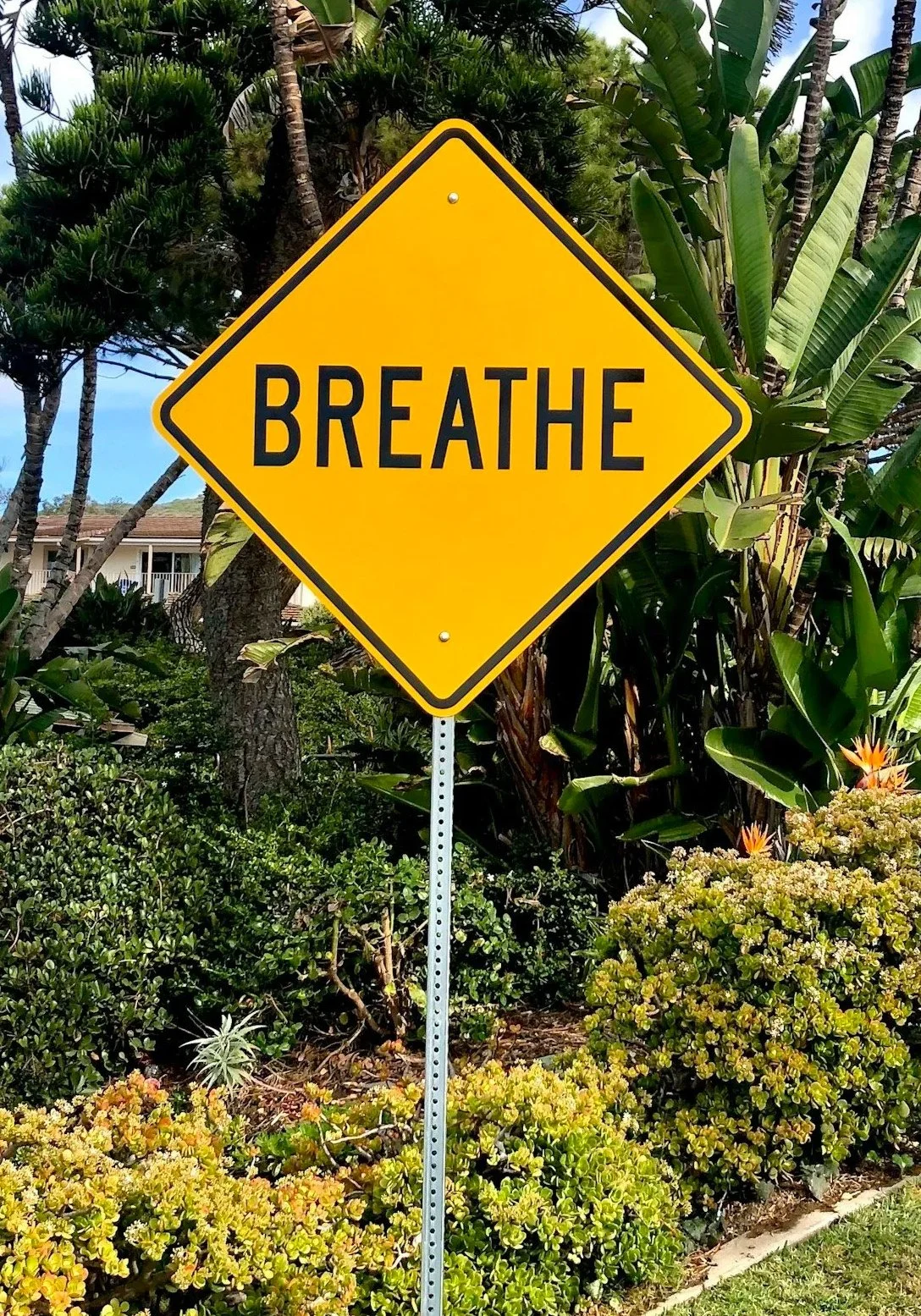
You’re already breathing anyway, use it to your advantage!
To regulate your emotions and calm yourself down, consciously slow your breath, and especially stretch out your exhalations. This simple technique has a profound physiological effect. A longer exhale relative to the inhale activates the vagus nerve, which is the main component of your parasympathetic nervous system—your body’s "rest and digest" mode. By stimulating the vagus nerve, you are sending a direct signal to your brain to reduce the stress response, which can even lead to a decrease in stress hormones like cortisol.
Because you’re breathing all the time, you can use this technique to your advantage all the time. A few slow, deep breaths with a prolonged exhale can literally be your 60-second reset in any moment that feels overwhelming.
These four instructions—eat, sleep, exercise, and breathe—are the fundamental scaffolding for keeping yourself grounded. If you need it, try it. If you don’t need it right now, you can still use these four fundamentals to bolster yourself and keep yourself on track. Ultimately, your best wellness solutions will be as unique as you are, but these four pillars are the non-negotiable foundation.
And most importantly, be well.
References
[1] Harvard Health Publishing. Nutritional psychiatry: Your brain on food. Harvard Medical School.
[2] Muscaritoli, M. (2021). The Impact of Nutrients on Mental Health and Well-Being. PMC.
[3] Texas A&M University System. The Link Between Nutrition and Mental Health.
[4] LSE Blogs. How do emotions and sleep affect one another?.
[5] Dr. Quintal. The Impact of Sleep on Emotional Regulation.
[6] ScienceDirect. Sleep and the recovery from stress.
[7] Frontiers in Psychology. How Does Exercise Improve Implicit Emotion Regulation?.
[8] ScienceDirect. Effectiveness of acute aerobic exercise in regulating emotion.
[12] Cyprus Journal of Medical Sciences. The Effect of Breathing Exercise on Stress Hormones.