
Ultraprocessed Time: The Way You Spend Your Hours Might Be Wrecking Your Sleep
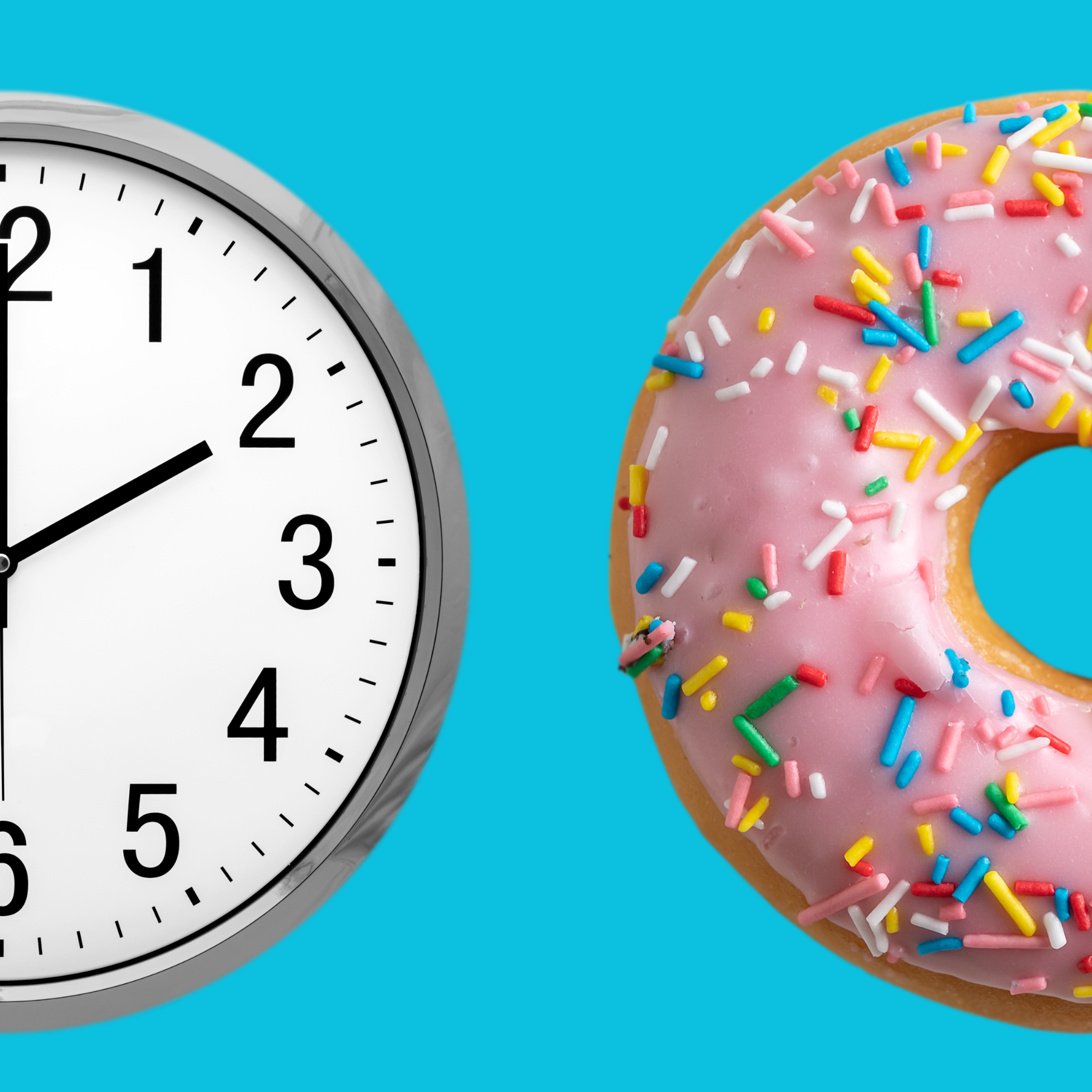
Ultraprocessed time is just as harmful AND enticing as ultraprocessed food
You already know what ultraprocessed food is. It generally tastes fantastic (because it’s been scientifically engineered to taste fantastic), and it gives your body almost nothing. Researchers who study the NOVA food classification system (a system that categorizes foods into four groups based on the extent and purpose of the industrial processing they undergo) have shown that these products are formulated from industrial ingredients rather than whole foods, and that heavy reliance on them is linked to poorer long-term health outcomes—think obesity, heart disease, diabetes, depression, sexual function, and mental acuity (Monteiro et al., 2019).
There is, however, a mental health equivalent to ultraprocessed foods, and to describe it, Dr. John La Puma has coined the phrase, “ultraprocessed time.” And its an apt descriptor.
Ultraprocessed time is the time you spend on something that feels compelling in the moment but leaves you with nothing real to show for it afterward, no rest, no connection, no growth, no learning, just a faint, sugar-crash-esque sort of emptiness. And much like ultraprocessed food, ultraprocessed time is everywhere. It’s designed to be irresistible, and it is quietly reshaping how well we sleep, how we regulate our emotions, and how much stress we carry around day to day.
As someone who works with people to resolve their sleep difficulties through CBT-I (Cognitive Behavioral Therapy for Insomnia), and who spends a good part of my own life exploring how to qualitatively and quantitatively enrich our minds and bodies, I want to walk you through what research actually says about how we spend our time—and importantly, what you can do to better marshal your use of it.
What Counts as Ultraprocessed Time?

The endless scroll, automatic next streaming episode, and reflexive phone check are all culprits of ultraprocessed time.
Think about the last time you sat down to check one notification only to realize that forty-five minutes has gone by. That is an archetypical span of ultraprocessed time. The endless scroll of a social feed, the autoplay queue that never asks permission before starting the next episode, the reflexive phone check between tasks that never quite resolves into rest. None of it is inherently bad or wrong, but it can easily become problematic. When ultraprocessed time becomes your default filler for every unoccupied minute, it starts to displace the things that would actually benefit you.
Clinicians and researchers describe this compulsive scrolling pattern as activating a variable-reward loop in the brain, similar to a slot machine, in which the unpredictability of what shows up next keeps you reaching for one more scroll (Boursier et al., 2021). Every new post, like, or notification delivers a small dopamine hit, and over time your baseline for stimulation rises. Ordinary, quieter activities like reading, gardening, or sitting with a cup of coffee start to feel understimulating by comparison, which drives you back to the screen for another hit. It is the exact same crash-and-craving cycle that shows up with ultraprocessed snack foods, only ultraprocessed time runs on attention instead of sugar.
The Cost: Stress, Mood, and a Body That Cannot Settle
The concept of ultraprocessed time might seem like an average, or even trendy, complaint about modern life. Unfortunately, however, there is real physiological cost.

Ultraprocessed time leads to significant sleep disruption.
Compulsive engagement with negative or high-arousal content activates the sympathetic nervous system, elevating cortisol and adrenaline in a way that keeps the body's stress response switched on long after the scrolling stops (today.ucsd.edu, 2025). So an activity like ‘zoning out’ with some social media that might feel relaxing is actually worsening your experience of stress. And, because a social media feed has no natural endpoint, unlike a single stressful event with a clear beginning and end, the nervous system does not get the same cue to back down. Researchers have also found associations between heavier daily screen use and greater symptoms of anxiety and depression, along with more frequent sleep disturbances and nightmares, based on data from one of the largest studies of youth brain development to date (today.ucsd.edu, 2025).
For my clients working through insomnia and sleep-maintenance issues, this pattern shows up constantly. Screens at bedtime keep the mind in a state of wakefulness and alert, which is precisely the opposite of what the brain needs to relax into sleep. Add in the light exposure itself, which can interfere with melatonin production, and you have a mind that is wired, a body that is unsettled, and a night that resists the very rest it needs (today.ucsd.edu, 2025).
Metabolizing It: What Actually Works
Here is the good news. Just as a nutrition-minded person wouldn’t need to eliminate every treat forever, you do not need to swear off your phone or streaming service. You just need to metabolize the ultraprocessed time you consume—much the same way your body best metabolizes a processed snack, by pairing it with things that can actually nourish you. Two ingredients matter most: being mindful of when and how much you consume, and getting outside and moving your body, at least twenty minutes a day.
Movement Is Not Optional, It Is Medicine
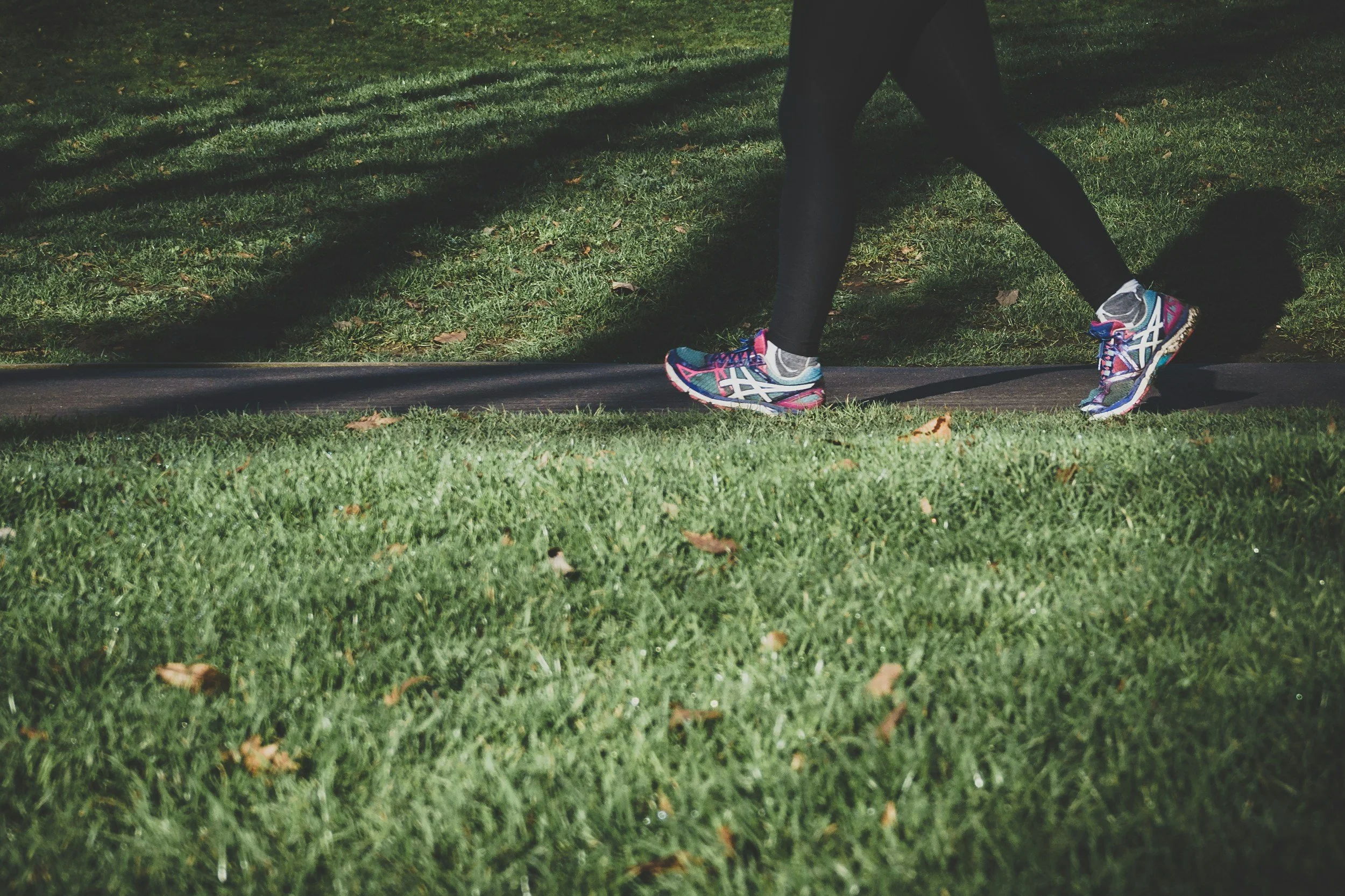
20-30 minutes of (unplugged) movement each day can combat the effects of ultraprocessed time.
There is a growing and consistent body of evidence connecting regular physical activity with better sleep. A systematic review of the research found that consistent exercise improves total sleep time, sleep efficiency, and even the time it takes to fall asleep, with the clearest and most reliable gains showing up in overall sleep quality (Alnawwar et al., 2023). A more recent meta-analysis went further, finding that shorter bouts of moderate activity, thirty minutes or less, performed several times a week, were actually the most effective dose for improving sleep quality, more effective than longer or higher-intensity sessions (Frontiers in Psychology, 2024). In other words, you don’t need to train for a marathon. A brisk twenty-minute walk, done consistently, outperforms an occasional heroic effort.
Movement also gives the brain a legitimate, healthy dopamine source, one that comes with a natural stopping point and a genuine sense of completion, unlike a feed that is engineered to never end. It is very much a foil to ultraprocessed time. It is the actual, legitimate, and nourishing dopamine hit that empty screen time steals from you.
Nature Is the Multiplier
Where you do that movement matters almost as much as whether you do it. Decades of environmental psychology research point to two complementary mechanisms behind why time outdoors is so restorative. Attention restoration theory holds that natural environments engage our attention effortlessly, which allows the deliberate, effortful kind of attention we use all day at work and on our screens to actually rest and recover (Kaplan and Kaplan, 1989, as cited in Jimenez et al., 2021). And theories about stress reduction describe a more physiological pathway, in which exposure to green space activates the parasympathetic nervous system and helps the body come down from a stress response (Jimenez et al., 2021).

Being active in nature (or outdoors, etc.) compounds the positive effects of movement.
The evidence backs this up in a very concrete way. One study using a controlled, multisensory virtual environment found that exposure to forest and park settings produced measurable physiological stress reduction that exposure to an urban environment did not (Hedblom et al., 2019). Even modest doses count. Some research suggests that as little as forty minutes in a natural setting can meaningfully improve a person's sense of restoration and mental clarity (ctpcsw.com, 2026).
So when I tell clients to get outside for at least twenty minutes a day, I am not being sentimental about my own garden and deep love of hiking (although I will admit that those things certainly help). I am pointing them toward one of the best-supported, lowest-cost interventions available for stress, mood regulation, and sleep.
A Small, Sustainable Practice
Here is what I suggest to many of my clients (because beyond the research, it’s what I do for myself):
Notice your ultraprocessed time. You do not need to track every minute, just get honest about where the hours are actually going.
Set a boundary, particularly in the hour before bed. This is often the single highest-leverage change for people I work with in CBT-I sleep counseling.
Get going with at least twenty minutes of movement daily, ideally outside. A walk around the block, time in the garden, or a slow loop through a nearby park are all great options.
Let it accumulate. These are not instant, one-time fixes. They are small deposits that compound over time, the same way that genuinely nourishing food results in better long-term health over time.
This is not about becoming a screen-free purist. It is about giving your mind the kind of rest that actually restores it, rather than the kind that just simulates rest while quietly running the up a tab on your stress and ill health. Your nervous system, your mood, and your sleep will all reflect the shift—and your mind and body will thank you for it.

If you are noticing that your own sleep, stress, or mood has been affected by these patterns, this is exactly the kind of work I do with clients, whether through CBT-I sleep coaching or holistic counseling. I would be glad to help you build a plan that fits your actual life. You can reach me at hello@adamscheldt.com or (716) 431-4695 to learn more and schedule a free consultation.
Be well.
References
Alnawwar, M. A., Alraddadi, M. I., Algethmi, R. A., Salem, G. A., Salem, M. A., & Alharbi, A. A. (2023). The effect of physical activity on sleep quality and sleep disorder: A systematic review. Cureus. https://pmc.ncbi.nlm.nih.gov/articles/PMC10503965/
Boursier, V., Gioia, F., Musetti, A., & Schimmenti, A. (2021). Facing loneliness and anxiety during the COVID-19 isolation: The role of excessive social media use in a sample of Italian adults. Frontiers in Psychiatry, 12, 586222.
Center for Therapeutic Practice (ctpcsw.com). (2026). Attention restoration theory: How nature media helps cognitive recovery. https://ctpcsw.com/attention-restoration-theory-how-nature-media-helps-cognitive-recovery
Frontiers in Psychology. (2024). Optimal exercise dose and type for improving sleep quality: A systematic review and network meta-analysis of RCTs. https://www.frontiersin.org/journals/psychology/articles/10.3389/fpsyg.2024.1466277/full
Hedblom, M., Gunnarsson, B., Iravani, B., Knez, I., Schaefer, M., Thorsson, P., et al. (2019). Reduction of physiological stress by urban green space in a multisensory virtual experiment. Scientific Reports, 9, 10113. https://doi.org/10.1038/s41598-019-46099-7
Jimenez, M. P., DeVille, N. V., Elliott, E. G., Schiff, J. E., Wilt, G. E., Hart, J. E., & James, P. (2021). Associations between nature exposure and health: A review of the evidence. International Journal of Environmental Research and Public Health, 18(9), 4790. https://pmc.ncbi.nlm.nih.gov/articles/PMC8125471/
Kaplan, R., & Kaplan, S. (1989). The experience of nature: A psychological perspective. Cambridge University Press.
Monteiro, C. A., Cannon, G., Lawrence, M., Costa Louzada, M. L., & Pereira Machado, P. (2019). Ultra-processed foods: What they are and how to identify them. Public Health Nutrition, 22(5), 936–941.
UC San Diego Today. (2025, April 9). Doomscrolling again? Expert explains why we're wired for worry. https://today.ucsd.edu/story/doomscrolling-again-expert-explains-why-were-wired-for-worry