
Does Weed Help You Sleep?What the Research Actually Says.
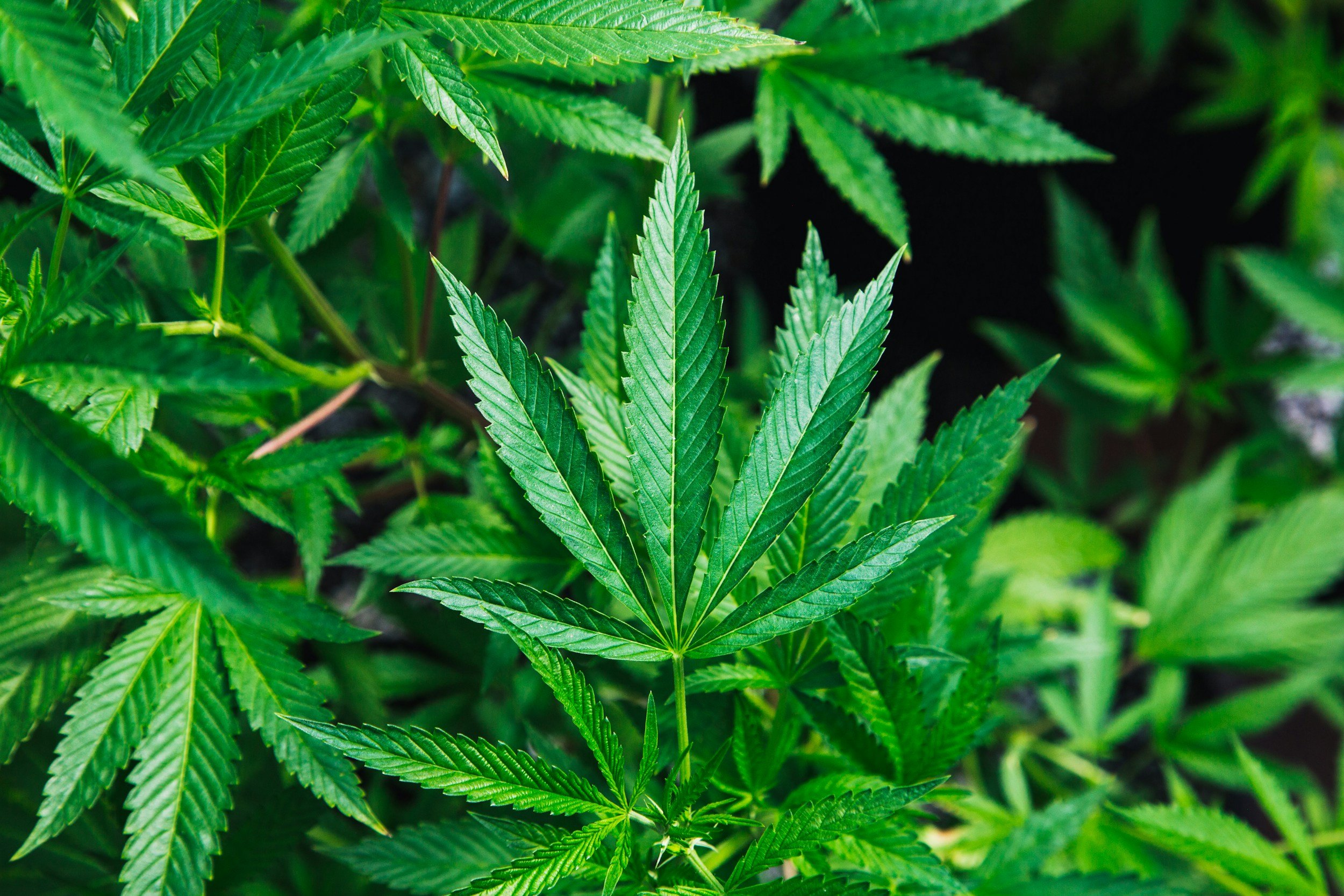
Cannabis is often used as an over the counter sleep aid. But should it be?
The question of whether cannabis helps with sleep is one of the most common things that comes up in my work as a CBT-I trained sleep coach. People arrive having already tried it, having heard about it, or actively wondering whether it might be the answer to a sleep problem that has been plaguing them for months or years. The honest answer is that the evidence is more complicated than either the enthusiastic advocates or the determined skeptics tend to acknowledge.
Here is a snapshot of what we actually know.
Why People Reach for It
The appeal of cannabis as a sleep aid is understandable and, to a degree, pharmacologically grounded. Before we fully get into it, however, there’s a few things that you need to know. First, we have a system within our bodies known as the endocannabinoid system. It’s the system in the body that most directly interacts with marijuana. Also, our bodies have and produce a neurotransmitter and essential-for-life chemical called adenosine. And, when it comes to sleep, adenosine operates in a cycle that governs our ‘sleep drive,’ and thus, our ability to (and timing for) sleep. All that being said, THC, the primary psychoactive compound in marijuana, interacts with the body’s endocannabinoid system in ways that can influence the adenosine pathway, the same biological mechanism responsible for building sleep pressure throughout the day. When adenosine levels rise, we feel increasingly sleepy; THC appears to mimic or amplify this signal, which is why many people report falling asleep more quickly after using cannabis (Sleep Foundation, 2025). For people who have spent years lying awake, anxious about sleep, watching the clock, that faster sleep onset can feel transformative.
Similarly, the subjective experience of sleeping more deeply, which some cannabis users report, can be another powerful motivator for THC use. (There is some evidence that THC can increase experiences of “deep sleep” for some.) But subjective experience and objective sleep architecture are two different things. And when researchers look carefully at what cannabis is actually doing to the structure of sleep, the picture becomes considerably more complicated.
The REM Sleep Problem
THC has been shown to suppress REM sleep.
REM sleep, or Rapid Eye Movement sleep, is the stage of sleep most associated with dreaming, emotional processing, memory consolidation, and creative thinking. It is not optional. Adequate REM sleep is essential for mental and emotional health, and its disruption is associated with a wide range of consequences including impaired memory, emotional dysregulation, and increased vulnerability to anxiety and depression. And, most dramatically, but true just the same, going without REM sleep will lead to death.
A 2025 randomized controlled trial published in the Journal of Sleep Research examined the effects of a single oral dose of THC and CBD on objective sleep outcomes in people with diagnosed insomnia disorder. Using high-density EEG to measure brain activity during sleep, researchers found that the cannabinoid combination reduced total sleep time by approximately 24 minutes and reduced time spent in REM sleep by 33.9 minutes. REM sleep latency, the time it takes to first enter REM, was extended by more than an hour (Suraev et al., 2026). These findings in people with insomnia who were using cannabis specifically to sleep better are not helpful.

REM sleep is essential for brain health—THC use can reduce it.
A 2025 systematic review and meta-analysis published in Sleep Medicine Reviews, which examined a full body of existing cannabis and sleep architecture research, found that the REM suppression effect appears to be particularly pronounced at higher doses, those above 20 milligrams of THC, and that lower therapeutic doses may produce less disruption. However, the review also noted that the evidence base remains limited, studies are varied (instead of consistent), and firm conclusions are difficult to draw (Velzeboer et al., 2025).
A separate 2024 study published in PMC, examining 177 adults using polysomnography and cannabinoid metabolite testing, found that cannabis use proximal to sleep was associated with significantly increased wake after sleep onset, increased REM latency, and decreased sleep efficiency, even at more normative levels of use (Holmqvist et al., 2024).
In short, cannabis may genuinely help some people fall asleep faster in the short term, while simultaneously disrupting the structure of that sleep in ways that may not be immediately perceptible but matter significantly for long-term brain and mental health.
The Tolerance and Rebound Question
Regular cannabis use leads to tolerance, meaning that the dose required to produce the same effect will have to increase over time. People who use cannabis nightly as a sleep aid often find that they need progressively more of it to achieve the same result. And when they stop, or even reduce use, many experience rebound insomnia and an increase in vivid, intense dreaming—due to a compensatory surge in the REM sleep that had been suppressed during cannabis use. This rebound effect can be significant enough to feel like a worsening of the original sleep problem. And if the response is to restart or re-increase THC/cannabis use a cycle is created that can be difficult to exit.
This doesn’t signal an addiction to marijuana, as rebound insomnia and the discontinuation experience is different than withdrawal. Likewise, it doesn’t mean that every person who uses cannabis for sleep will become dependent on it for sleep. But it does mean that the short-term subjective benefit and the long-term picture may be very different from one another, and that is an important distinction to make.
An added concern is that everyone’s body reacts to THC and cannabis differently. Much like alcohol affects people differently so too can cannabis products. What is true of one person’s experience, may not hold true for someone elses—a fact that further complicates dosage, tolerance, efficacy, and potential discontinuation experiences.

Dosage and actual content can be incredibly variable. Product testing is neither standardized nor rigorous.
What Is Actually in Your Gummy
A 2024 study published in Frontiers in Pharmacology,which tested 202 commercially available cannabidiol products purchased from retail stores and online, found that 74% deviated from their label claim of CBD potency by at least ten percent. Heavy metals were detected in 44 of the 202 products tested, with lead being the most prevalent. Residual solvents were also detected across a significant number of products (Gidal et al., 2024).
A separate analysis published by NORML, drawing on University of Miami research, found that among CBD edible products tested, 42% were positive for lead, 37% for mercury, and 28% for arsenic. A Johns Hopkins University study found that 76% of hemp-derived CBD products purchased online or in stores were mislabeled for potency (NORML, 2024).
For THC products, a similar pattern exists. Cannabis flower labeled as containing 30% THC has been found in independent testing to frequently contain only 20 to 24%, a discrepancy that has been attributed to both testing methodology failures and, in some cases, intentional inflation of potency claims.
What this means in practice is that when you take a cannabis gummy before bed, you often do not know the actual dose you are receiving. You do not know with certainty what else is in it. And the sleep effects you experience, or do not experience, may be difficult to attribute with confidence to any specific compound at any specific dose. For a person trying to manage a genuine sleep disorder, that constellation of uncertainty creates significant problems.
What Actually Works
The decision about whether to use cannabis is yours, and it is a decision that should ideally involve a conversation with your physician—who knows your full health picture in ways that an online article cannot.
The evidence for cannabis as a reliable, sustainable, long-term treatment for insomnia is very limited, and some of what the research shows about its effects on sleep architecture should give us real pause (especially for nightly use).

CBT-I is the gold standard for insomnia treatment.
There is, however, a proven method for the treatment of insomnia: Cognitive Behavioral Therapy for Insomnia (CBT-I). CBT-I is the most effective and durable treatment for chronic insomnia that we have. It is recommended as the first-line treatment for chronic insomnia by the American College of Physicians and the American Academy of Sleep Medicine ahead of any sleep medication and ahead of any supplement or herbal aid. Its effects are lasting in a way that pharmacological interventions (medication or substance use) are not, because it resolves the foundational issues behind insomnia rather than simply masking symptoms (Qaseem et al., 2016).
I am a CBT-I trained sleep coach and a member of the American Academy of Sleep Medicine—which, admittedly makes me sound biased. That being said, however, the evidence really speaks for itself. There is a reason that I chose to get a credential in CBT-I. It is the researched, gold-standard treatment for insomnia. Likewise, I have seen what it can do for people who have been stuck in poor sleep for years (sometimes decades).
If you are using cannabis for sleep and finding that it is working beautifully for you with no downsides, then I am quite glad that you found something that works for you. But if you are using it because nothing else has worked and you are still not sleeping the way you want to, I would love to talk with you. CBT-I may be exactly what you have been looking for. Reach out to schedule a free 20-minute introductory call.
Sweet dreams.
References
Gidal, B. E., Vandrey, R., Wallin, C., Callan, S., Sutton, A., Saurer, T. B., & Triemstra, J. L. (2024). Product labeling accuracy and contamination analysis of commercially available cannabidiol product samples. Frontiers in Pharmacology, 15, Article 1335441. https://pubmed.ncbi.nlm.nih.gov/38562466/
Holmqvist, M., Chung, F., Ryan, C. M., & Mielke, M. M. (2024). The impact of cannabis use proximal to sleep and cannabinoid metabolites on sleep architecture. Sleep (Oxford), 47(10). https://pmc.ncbi.nlm.nih.gov/articles/PMC11446118/
NORML. (2024, July 26). Analysis: Most commercially available CBD products mislabeled, make misleading claims. https://norml.org/blog/2024/07/26/analysis-most-commercially-available-cbd-products-mislabeled-make-misleading-claims/
Qaseem, A., Kansagara, D., Forciea, M. A., Cooke, M., & Denberg, T. D. (2016). Management of chronic insomnia disorder in adults: A clinical practice guideline from the American College of Physicians. Annals of Internal Medicine, 165(2), 125–133. https://doi.org/10.7326/M15-2175
Sleep Foundation. (2025). Cannabis and sleep: Benefits and risks. https://www.sleepfoundation.org/sleep-aids/cannabis-and-sleep
Suraev, A., McGregor, I. S., McCartney, D., Marshall, N. S., Kao, C. H., Wassing, R., D’Rozario, A. L., Kim, J. W., Grunstein, R. R., & Hoyos, C. M. (2026). Acute effects of oral cannabinoids on sleep and high-density EEG in insomnia: A pilot randomised controlled trial. Journal of Sleep Research, e70124. https://doi.org/10.1111/jsr.70124
Velzeboer, R., Malas, A., Wei, S., Berger, R., Parmar, V., & Lai, W. W. K. (2025). Cannabis and sleep architecture: A systematic review and meta-analysis. Sleep Medicine Reviews, 84, Article 102164. https://doi.org/10.1016/j.smrv.2025.102164