
Be A Tree Hugger—Science Says It’s Good for You
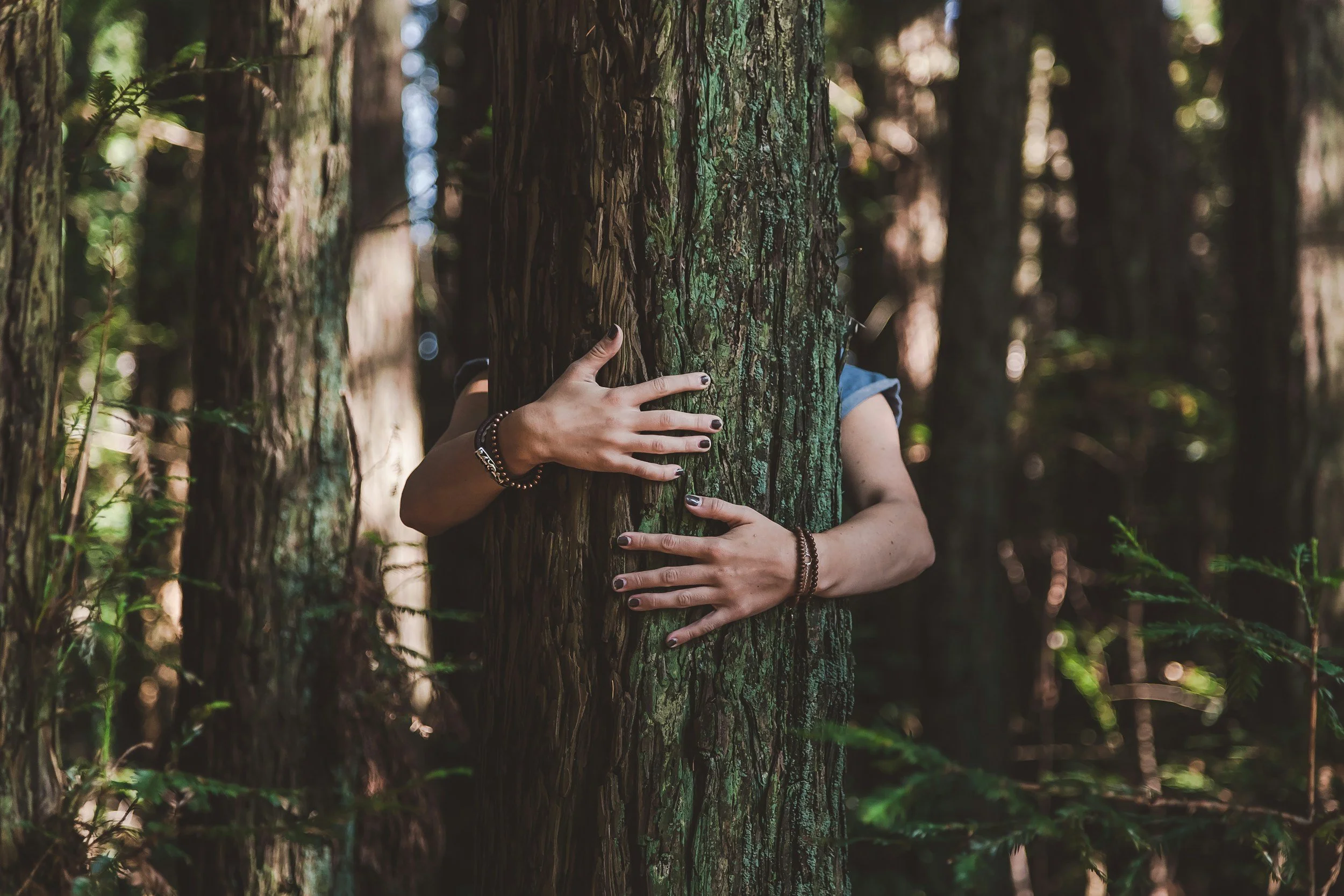
Tree hugging is actually good for you—no really!
Let’s rehabilitate the phrase “tree hugger.”
For decades, it’s been used as a gentle dig at people who earnest, well-meaning, maybe a little over the top, and care deeply about the natural world. But here is what we now know with a fair degree of scientific certainty: those tree huggers are onto something. Something that solid research has been quietly confirming for years (and that more people would benefit from taking seriously).
Being in nature, or even being meaningfully connected to it in some way, delivers a genuine and measurable boost to your wellbeing. Not in a vague, vibe-y, feels-nice kind of way, but in a specific, physiological, here-is-what-is-happening-in-your-body kind of way. And the dose required is smaller than you might think.
Twenty Minutes: The Starting Point
A study published in Frontiers in Psychology, led by Dr. MaryCarol Hunter at the University of Michigan, set out to establish what researchers called the optimal dose of a nature experience. Participants were asked to spend time outdoors in a place that gave them a sense of contact with nature, at least three times a week, for whatever duration felt manageable within their actual lives. Cortisol levels, the primary biological marker of stress, were measured from saliva samples before and after each session.
The results were striking. One of these nature experiences produced a 21.3% per hour drop in cortisol (beyond the hormone’s natural decline/metabolic rate). And the efficiency of that effect, measured as benefit per time spent, was greatest between 20 and 30 minutes. Benefits continued to accumulate beyond that point, but more slowly. In other words, if you have only 20 to 30 minutes to give to this, that window is genuinely worth having (Hunter et al., 2019).
This is what researchers have begun calling a ‘nature pill’: a prescribable, evidence-based recommendation for time outdoors as a tool for stress reduction. The idea is a little clinical for something as elemental as a walk in the park, but the underlying idea is exactly right. Nature is not a luxury or an indulgence. It is, as the evidence increasingly suggests, a form of healthcare.
What Nature Does for Your Tired Brain
Beyond the well established stress reduction benefit, nature also does something specific and valuable for your ability to pay attention.
Your focus is limited, but nature offers the best way to recharge it.
In the 1980s, Rachel and Stephen Kaplan at the University of Michigan developed what they called “attention restoration theory.” Their central insight was that the kind of attention we use for most of modern life—focused, deliberate, effortful—is a limited resource. We deplete it through sustained concentration, decision-making, and the relentless stimulation of modern environments. And when it runs low, we become irritable, distracted, and mentally fatigued in ways that feel like a general cloudiness rather than a specific tiredness.
Nature, the Kaplans proposed, restores this depleted attention through what they called soft fascination: the gentle, effortless engagement that comes from watching clouds drift, leaves move, or water flow. These natural stimuli hold our interest without demanding our cognitive resources, allowing the directed attention system to rest and recover (Kaplan & Kaplan, 1989).
Decades of subsequent research have supported this framework. People who spend time in natural environments perform better on attention tasks afterward. Workers with views of nature from their desks report higher wellbeing and sharper focus. Even exposure to photographs of natural scenes produces measurable attention restoration effects compared to equivalent urban imagery. The brain responds to nature in a specific and restorative way that urban environments simply do not replicate.
The Rumination Connection
Many of my clients have a struggle with “shutting off their brain” and “getting their thoughts to quiet.” So, this is an area that I find truly compelling, especially for the work I do.
Rumination is the psychological term for that particular kind of thinking most of us know all too well: the loop of repetitive, self-focused, negative thought that keeps running even when you would very much like it to stop—the replayed conversation, the catalogued regret, the anxious inventory of everything that could go wrong. Rumination is not just unpleasant; it is a well-established risk factor for depression, anxiety, and a range of other mental health challenges.
A 2015 study published in the Proceedings of the National Academy of Sciences, led by Gregory Bratman at Stanford University, investigated whether exposure to nature could interrupt patterns of rumination. Participants were randomly assigned to take a 90-minute walk either through a natural, tree-lined area near the university’s campus or through an urban environment. Before and after, researchers measured both self-reported levels of rumination and neural activity in the subgenual prefrontal cortex, a brain region that lights up during rumination and is associated with risk for depression and mental illness.
The results were unambiguous. Participants who walked in nature reported significantly lower levels of rumination afterward. And the brain imaging confirmed it: neural activity in the subgenual prefrontal cortex decreased measurably in the people who walked in nature, but showed no such change in the urban walkers (Bratman et al., 2015). In other words, nature does not just make us feel a little better. It appears to quiet, at a neurological level, the very circuitry that drives the downward spiral.
I can’t overstate how meaningful this is. So much of what I see in my counseling and coaching practice involves people stuck in cycles of ruminative thinking that are genuinely difficult to interrupt. The idea that a walk through a park can measurably reduce the neural activity associated with that pattern is not a small thing. It is an accessible, low-cost, widely available intervention that most people are dramatically underusing.
What the Trees Are Doing To You
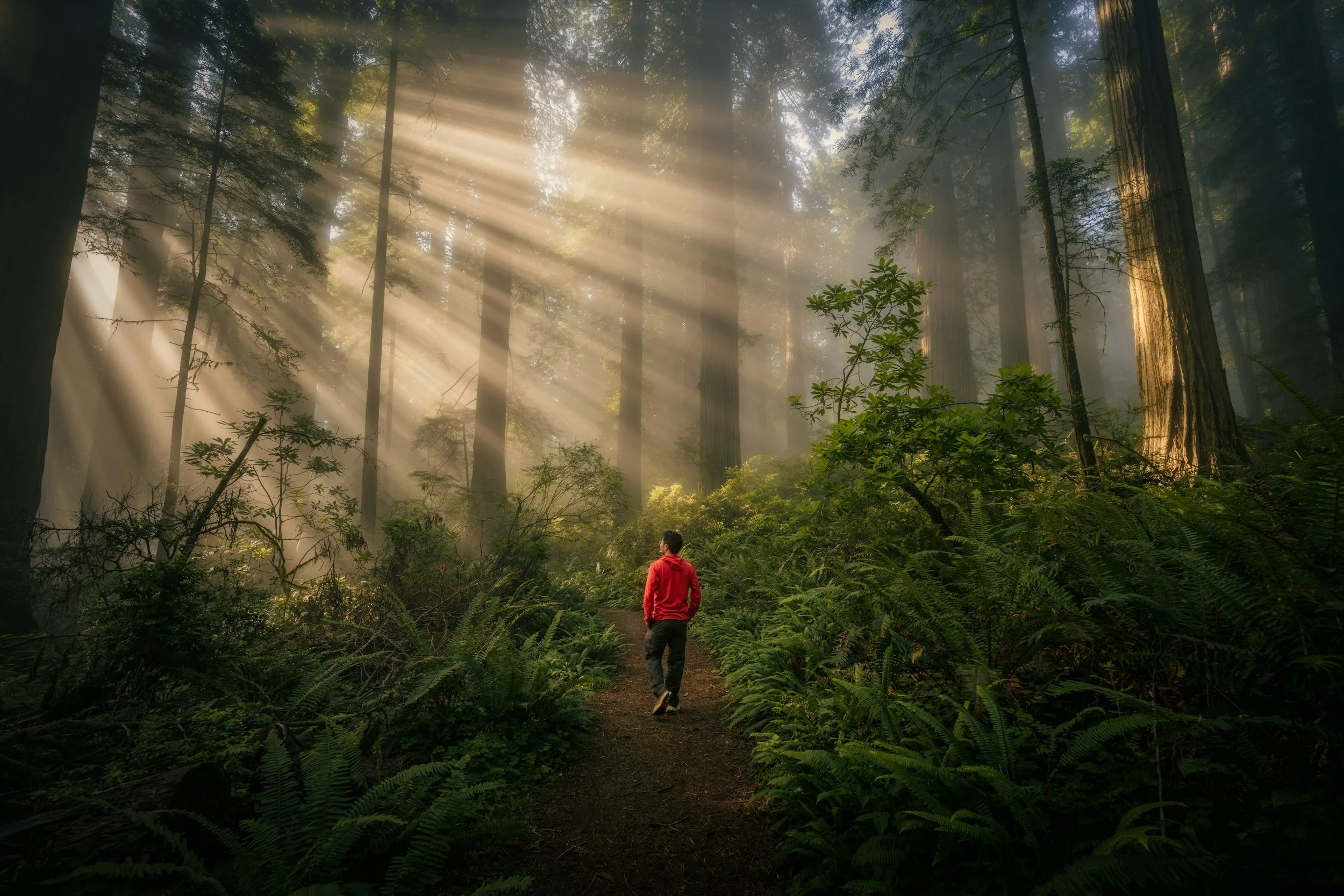
Trees and forests are even good for your immune system.
It may be a bit surprising that the immune system is involved in all of this as well.
Trees and plants (particularly conifers) emit aromatic compounds called phytoncides as a natural defense mechanism against bacteria and fungi. When humans breathe these compounds in during time spent in forested environments, something measurable happens to our immune systems.
Dr. Qing Li, a researcher at Nippon Medical School in Tokyo and one of the world’s leading experts in ‘forest medicine,’ has conducted extensive research on this phenomenon through the lens of the Japanese practice known as Shinrin-yoku, or forest bathing. In landmark studies, participants who spent two to three days in a forest environment showed NK cell activity increases of roughly 50% compared to pre-trip baseline. NK cells, or natural killer cells, are white blood cells that form a critical part of the innate immune system, seeking out and destroying virus-infected cells and cancerous ones. The immune boost from a forest stay lasted more than seven days after returning home, and in some studies, effects were observed for more than a month (Li, 2010).
More recent research has confirmed and extended these findings. A systematic review published in 2024 found consistent increases in NK cell activation following phytoncide exposure across multiple human studies, and a 2025 narrative review found that forest bathing is associated with enhanced NK cell activity, modulation of inflammatory cytokine profiles, reductions in cortisol, and shifts toward parasympathetic nervous system dominance, the branch of the nervous system associated with rest, recovery, and healing (Jiang et al., 2024; National Library of Medicine, 2025).
You do not need to live next to an old-growth forest for this to be relevant to you. And although forests laden with conifers (think, pine trees) pack the biggest punch for the immune system, urban parks, tree-lined paths, and green spaces of all kinds offer meaningful contact with nature. The research does not demand complete immersion in wilderness—only a little presence in more natural setting.
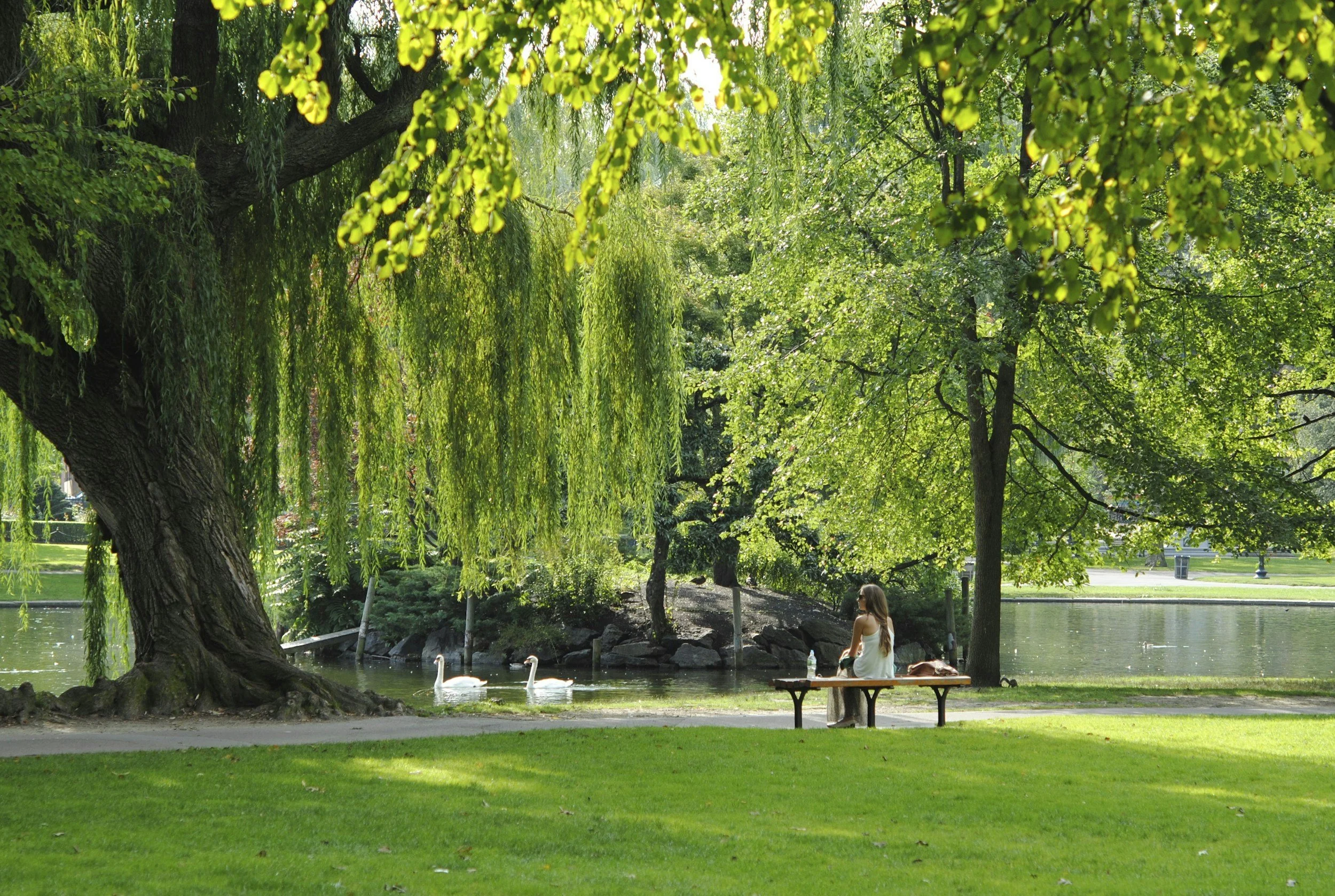
The benefits of being in nature can work for indoor-kids too!
You Don’t Have to Be an Outdoors Person
One of the most encouraging aspects of this entire body of research is how democratic it is.
You do not need to be a hiker, a naturalist, or someone who grew up on a farm. You do not need expensive gear or a lot of time. The Hunter study (at the University of Michigan), was conducted with urban dwellers using whatever outdoor spaces were available to them in their daily lives. The Bratman rumination research used a tree-lined path near a university campus. The benefits appear to be accessible wherever and however you are able to encounter nature (even in modest doses and likewise, even in cities).
And if getting outside genuinely is not possible on a given day, the research on Attention Restoration Theory suggests that even photographs of natural scenes produce some kind of restorative effect. A plant on your desk, a view of trees from your window, recordings of natural soundscapes: these are not full and complete substitutes for time outdoors, but they do offer a minor benefit. Nature, it seems, has a remarkable capacity to meet us wherever we are.
Bring Someone With You
There is one addition I would make to everything that we’ve covered: do it with another person when you can.
The research on social connection and wellbeing is robust. (Isolation carries health risks comparable to smoking.) But more to our point, shared experiences in nature have been shown to build connection, generate conversation, and create the kind of easy, low-pressure togetherness that is genuinely better for you than striking out on your own.
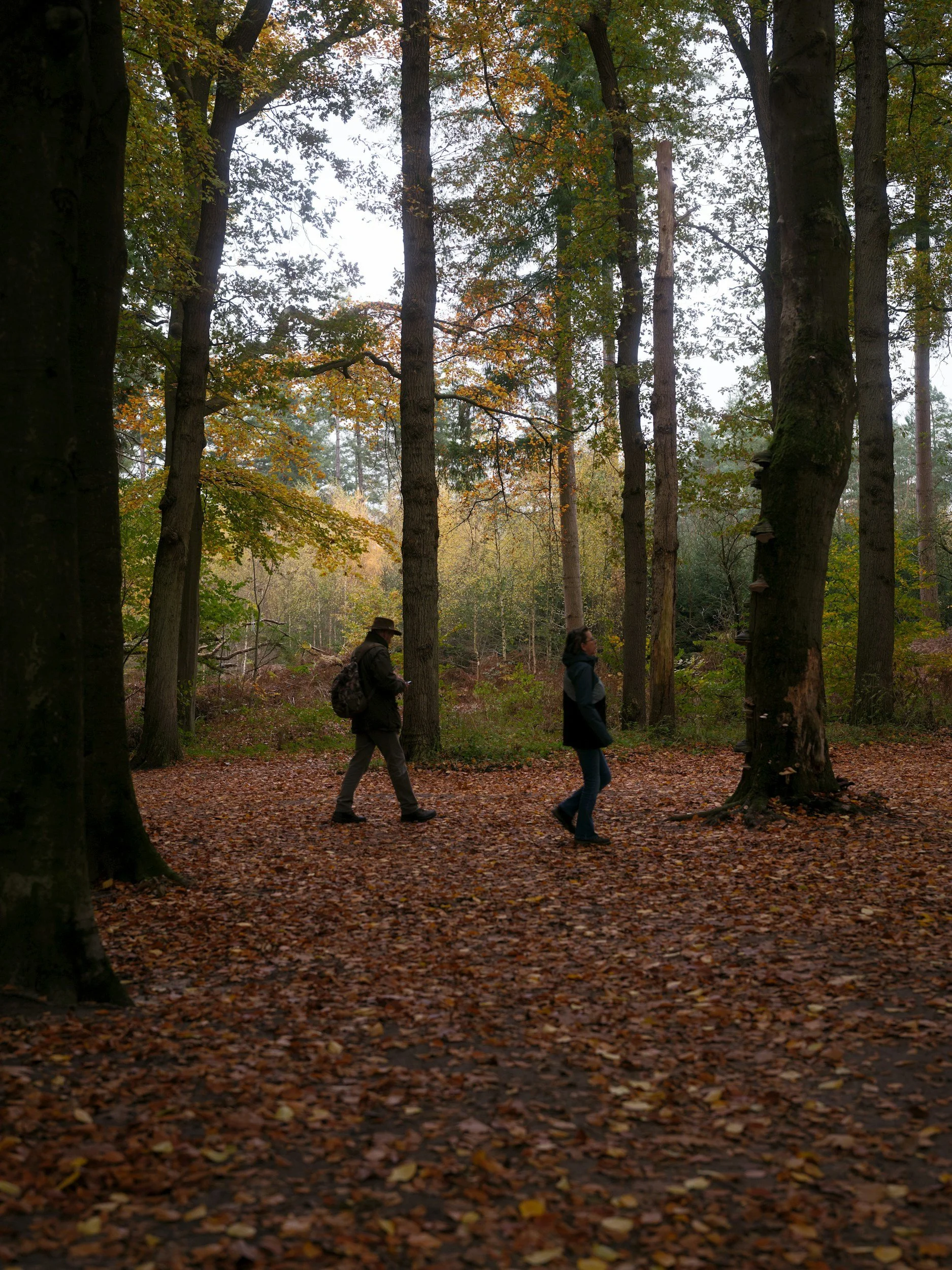
A walk in the park with a friend is not just pleasant. It is a ‘stackable’ wellness practice: the nature benefits, the movement/exercise benefits, and the social connection benefits, all in one unassuming, pleasant afternoon. It doesn’t get much better than that.
A Simple Invitation
If you are carrying more stress than you would like, if your attention feels frayed, if you notice yourself caught in loops of anxious or negative thinking, the research is pointing… outside. Twenty minutes—somewhere that feels like nature.
A park, a tree-lined street, a backyard, a trail—just go and sit or walk. Notice and breathe. Let your attention land on something that moves on its own—water, leaves, birds, clouds. And let your cortisol (and stress) dissipate just like the research says it will. And ya know what? If the spirit moves you, go ahead and hug a tree. The science, at this point, is on your side.
If you’d like support building practices like this one into a life that genuinely feels better and more fulfilling, that is the kind of holistic, whole-person work I love to do with clients. Reach out at AdamScheldt.com to schedule a free 20-minute introductory call.
References
Bratman, G. N., Hamilton, J. P., Hahn, K. S., Daily, G. C., & Gross, J. J. (2015). Nature experience reduces rumination and subgenual prefrontal cortex activation. Proceedings of the National Academy of Sciences, 112(28), 8567–8572. https://doi.org/10.1073/pnas.1510459112
Hunter, M. R., Gillespie, B. W., & Chen, S. Y.-P. (2019). Urban nature experiences reduce stress in the context of daily life based on salivary biomarkers. Frontiers in Psychology, 10, Article 722. https://doi.org/10.3389/fpsyg.2019.00722
Jiang, T., Li, Q., Ochiai, H., & Yan, T. (2024). Phytoncides and immunity from forest to facility: A systematic review and meta-analysis. Urban Forestry & Urban Greening.
Kaplan, R., & Kaplan, S. (1989). The experience of nature: A psychological perspective. Cambridge University Press.
Li, Q. (2010). Effect of forest bathing trips on human immune function. Environmental Health and Preventive Medicine, 15(1), 9–17. https://doi.org/10.1007/s12199-008-0068-3
Li, Q., Morimoto, K., Kobayashi, M., Inagaki, H., Katsumata, M., Hirata, Y., Hirata, K., Suzuki, H., Li, Y. J., Wakayama, Y., Kawada, T., Park, B. J., Ohira, T., Matsui, N., Kagawa, T., Miyazaki, Y., & Krensky, A. M. (2008). A forest bathing trip increases human natural killer activity and expression of anti-cancer proteins in female subjects. Journal of Biological Regulators and Homeostatic Agents, 22(1), 45–55.
National Library of Medicine. (2025). Forest bathing (Shinrin-yoku) and preventive medicine: Immune modulation, stress regulation, neurocognitive resilience, and neurological health. PMC. https://www.ncbi.nlm.nih.gov/pmc/articles/PMC12921901/
White, M. P., Alcock, I., Grellier, J., Wheeler, B. W., Hartig, T., Warber, S. L., Bone, A., Depledge, M. H., & Fleming, L. E. (2019). Spending at least 120 minutes a week in nature is associated with good health and wellbeing. Scientific Reports, 9, Article 7730. https://doi.org/10.1038/s41598-019-44097-3
Adam Scheldt is a holistic counselor, life coach, and founder of Adam Scheldt Wellness LLC, serving clients in Western New York and online. To schedule a free 20-minute introductory call, use the “Book a Free Call” link at the top of the page.