
The shift to and from daylight savings time is fascinating—at least for folks like me. (Although I might argue that it is, in fact, a pretty interesting topic for just about anyone with even the slightest curious mind.) A lot of people really like daylight savings time because it lets them enjoy more daylight in the warmer months. The American Academy of Sleep Medicine really does not like it because of the effects it has on our sleep and health. And we’ll dive into all of that soon, but first it’s important to take a look at where daylight savings time comes from in the first place and why we have it at all.
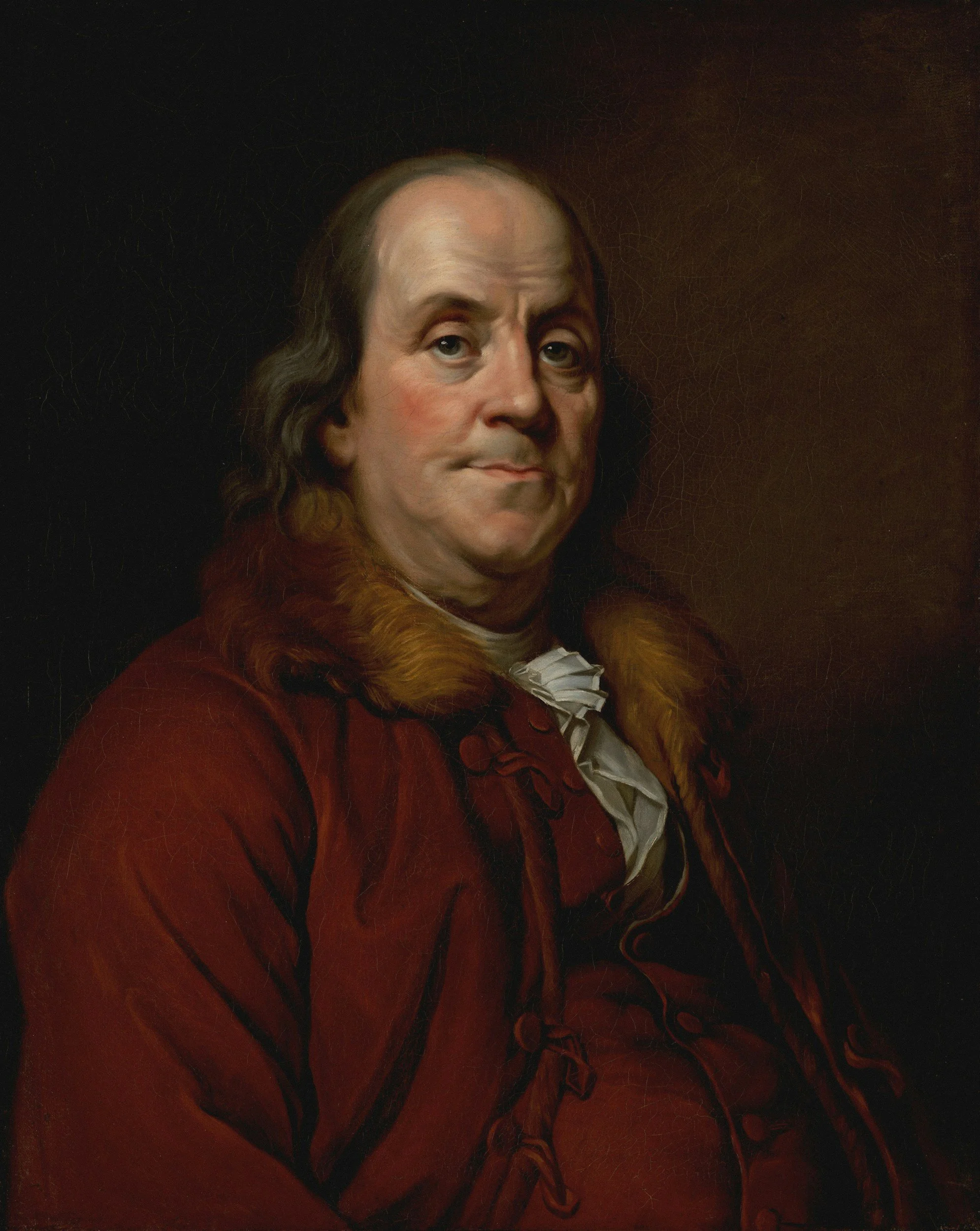
Ben Franklin invented many things, but daylight savings time was not one of them.
The History of Daylight Savings Time
The famous and historical polymath Benjamin Franklin, the inventor of such things as swim fins, bifocal eye glasses, lighting rods, the glass armonica (a musical instrument made of glass), odometers for carriages, and even flexible urinary catheters, is often credited with thinking up daylight savings time. Unfortunately, he did not. Although he may have laid the groundwork for it. While living in Paris, he was dissatisfied about the cost and availability of candles. He felt that if people simply started their day as the sun came up, instead of sleeping in and using a lot of candles after dark, they could be far more efficient and save both resources and money. His suggestion, however, was not to alter everyone’s clock. Instead, in a satirical essay published in 1784, he proposed taxing windows that had shutters, rationing candles, and ringing church bells and firing cannons down city streets first thing in the morning as a sort of massive, collective wake-up alarm (Franklin, 1784). Needless to say, Parisians of the late 1700s were not interested. (Although it might merit saying that, Franklin was such a believer of getting fresh air and sunlight that he would frequently sit completely naked at his windows, on full display, to best absorb the sun’s goodness in what he called “air baths” [Isaacson 2003].)
The actual idea of day light savings time was first thought up in 1895 by a New Zealand entomologist and astronomer, named George Hudson, who proposed a two-hour clock-shift to get more evening daylight for collecting insect specimens. While many thought Hudson’s idea was interesting, it never really got off the ground. Later, in 1907, William Willett, wrote and published a pamphlet in Great Britain called “The Waste of Daylight,” in which he proposed shifting clocks by 20 minutes over the course of several Sundays in the spring (and then back over several Sundays in the fall) for a total shift of 80 minutes. The goal was to improve public health (mostly through mood, as people would experience more daylight after they were done working) and to reduce energy consumption. Despite a good deal of support, Willett’s idea also didn’t catch on, and attempts to codify it were repeatedly rejected by Parliament.
Willett’s idea, however, spread, and several years later, Germany implemented a day light savings time plan during World War I. The main goal for Germany was to reduce energy and fuel use as part of its war effort. Not to be left behind, other European nations (including the UK) began to adopt it in 1916. (Unfortunately, Willett died in 1915 and never got to see his idea come to fruition.) The United States made daylight savings time law in 1918, however, the law was repealed a year later because of its deep unpopularity with farmers and agricultural workers.
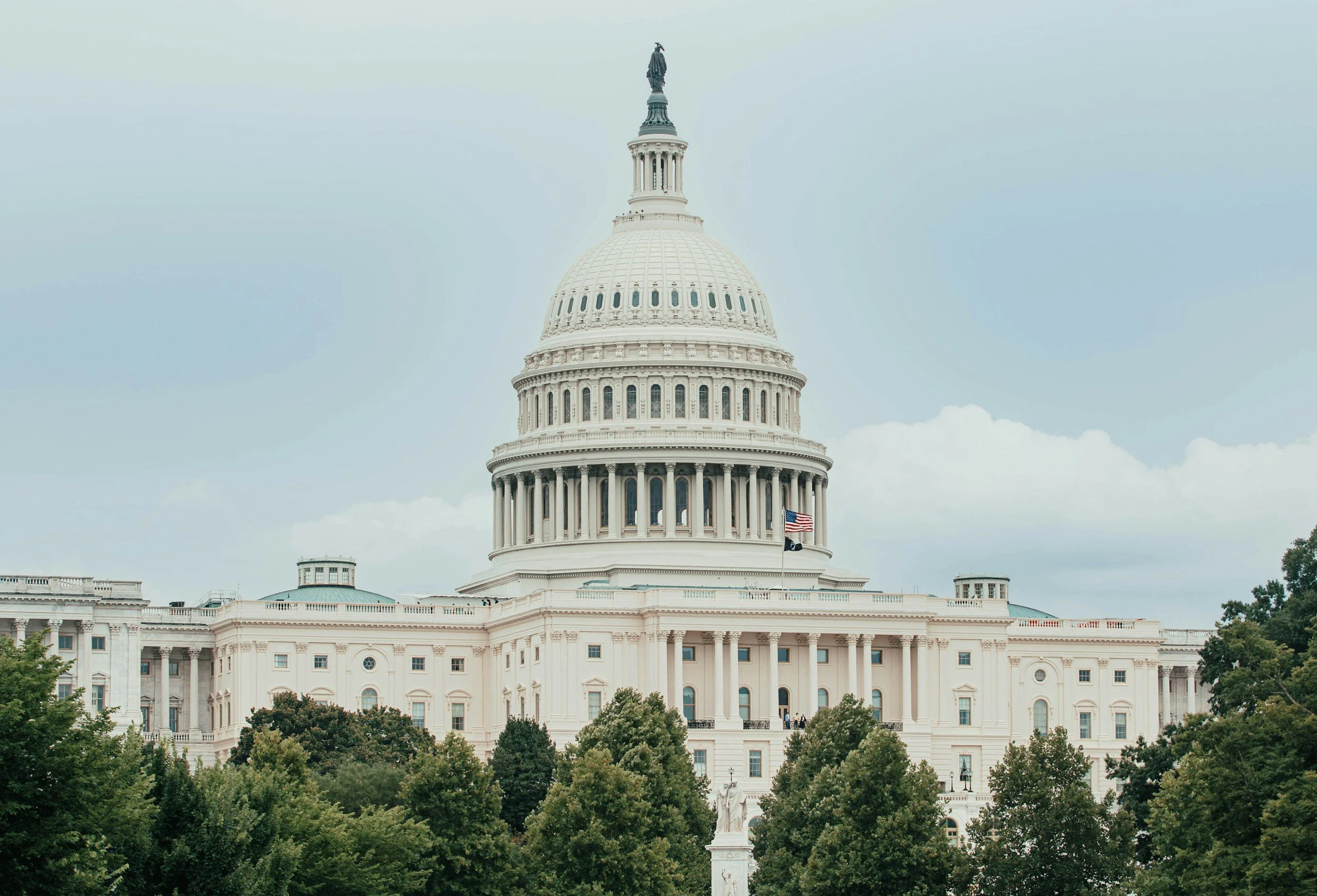
The Uniform Time Act established much of what we know as daylight savings time.
Day light savings time had an on-again-off-again (mostly off-again) trek through the following decades until World War II, at which point President Franklin D. Roosevelt re-instituted year-round daylight savings time (dubbed "War Time") shortly after the attack on Pearl Harbor to save energy and resources. It was unpopular and was repealed after the war ended. In the 20 or so years following World War II, there was no federal governance regarding time in the United States, and states—and even municipalities—were largely free to do what they liked with their clocks. Unfortunately, this created massive confusion. Trains and airlines were particularly affected and at times crippled. And, a person taking a bus across a state or two might have to change the time on their watch seven or eight times.
The Uniform Time Act of 1966 established concrete time zones in the US. It set firm dates for daylight savings time, although states could opt out and remain on standard time year around if they so chose. Although some changes have been made to the dates of when we shift to and from daylight savings time over the years, this is the system that we still have today—with one exception. In late 1973, President Richard Nixon signed a law putting the country on daylight saving time for the entire year, and it took effect in January 1974. It didn't last and was repealed within months (Beaujon, 2022).
The Many Problems
And here’s why… The successful implementation of daylight savings time was consistently because of the idea that it would save fuel and energy, while also boosting general morale. The reality is that none of that actually happens. Yes, shifting our clocks such that we experience more sunlight at later hours means that we are not using as much energy to light and fuel our homes in the evening. However, it also means that mornings are dark, and households use just as much electricity at the start of their day as they had been at the end. (Estimates of the actual savings are small at best. A federal estimate from the 1970s put them at about 1% [Beaujon, 2022], and author Michael Downing argues that daylight saving time does not save energy at all [Block, 2007].) Also, the morale boosting effects of daylight savings time really only applies in the summer months and depends on how far north or south you happen to live. Your location relative to the equator determines the actual amount of sunlight you can get. And in the winter, daylight savings time effectively means that for many, the sun won’t rise until after 9am. Both times that a country has tried year-round daylight saving time in recent memory, in the United States in 1974 and in Russia in 2011, it proved so unpopular that it was reversed rather quickly (Associated Press, 2014; Beaujon, 2022). Further, energy savings didn’t appear, general mood went down, and overall costs and poor health increased.
In the short lived 1974 law, as soon as the dark mornings of winter arrived, car accidents spiked. Without the sunlight to help wake people up (exposure to sunlight is the main driver of biological wakefulness), they were not safe drivers. Children, also sleepy while walking to school or to bus stops in the dark mornings were also less safe. In Florida alone, eight children were killed in traffic accidents in the weeks after the change, and the governor asked Congress to repeal the law (Beaujon, 2022). But there were other health issues as well. Heart attacks, strokes, and other cardiovascular problems increased.
The health and safety concerns are why doctors and medical associations like the American Academy of Sleep Medicine are solidly in favor of eliminating seasonal time changes and adopting permanent standard time (Rishi et al., 2020; Rishi et al., 2024). The Academy points to evidence of increased cardiovascular events (including heart attacks and strokes), mood disorders, and motor vehicle crashes following the spring time change (Rishi et al., 2020). One analysis of nearly all fatal crashes in states that observe daylight saving time found that the spring transition increased the risk of a fatal traffic accident by about 6% in the week that followed (Fritz et al., 2020). Any time system that markedly differs from our natural, biological circadian rhythm is just not good for us. That being said, switching between time systems is even worse. Particularly in the spring, there is a spike in these health problems when the time change takes effect. And these problems may not be limited to the immediate aftermath of a time change. The ongoing misalignment between the clock on the wall and our internal biological clock has been associated with risks to both physical and mental health (Rishi et al., 2024).
At this point, there is insurmountable evidence that supports year-round standard time. Trailing far behind in a very distant second place, would be year-round daylight savings time. And the worst option is actually the system we have now (as of the time of publication), in which we switch back and forth between a system that more closely honors our biological processes (standard time) and a time that artificially imposes a different system on us (daylight savings time).
If It’s Not Healthy, Why Do We Do It?
If the rest of this article didn’t particularly interest you, this part should. If daylight savings time is so bad, why do we have it? Initially, it began as a perfectly worthy thought experiment that imperfectly played out during the first world war. But, that imperfect (and in many ways failed) experience of day light savings time back in the early 1900s, opened the door to money and profit.

Daylight saving time during the warmer months is the perfect combination of something people think they like and the opportunity to make money off of it. Since the 70s, and even now (at the time of publication, the House of Representatives has passed the Sunshine Protection Act to make daylight saving time year-round, and the bill awaits action in the Senate), industries that benefit from extra daylight in the evening hours have pushed hard to extend or enshrine daylight saving time ("House Votes," 2026). The golf industry, for example, told Congress in the 1980s that one additional month of daylight saving time was worth hundreds of millions of dollars in additional sales (Block, 2007). These industries have understandable financial reasons for wanting it.
The "fall back" change has its own candy-coated history. When the date was moved to the first Sunday in November (by the Energy Policy Act of 2005, which took effect in 2007), candy makers were, among the groups that lobbied to push the time change past Halloween, hoping to give trick-or-treaters an extra hour of daylight and sell more candy (Block, 2007; Downing, 2005). Despite all of this, I am not trying to assert that government officials are out to fleece the public for the sake of corporations. Nevertheless, this is how things have played out. And, for good or ill, major decisions that affect everyone’s health and wellbeing have often been heavily influenced by a slim minority who stood, or stand, to profit.
What You Can Do
Before I wrap up this article, there is one other thing that is important to point out, daylight savings time does not give you more sunlight. The sun and Earth do not shift their rotation and orbit because some governments passed a law or two. Daylight saving time only shifts when you get to experience daylight during your day. And it comes at a cost to both your short and long term health. But, there are things that you can do to help mitigate the struggles that time changes create.
First, if at all possible, start shifting your bedtime and wake-up time by 10-15 minutes a day over the course of several days leading up to the change. Essentially, you are slowly acclimating yourself to the new time so that when it actually hits, the time change isn’t much of a personal change for you. The second way to best adjust to time changes is to get a good dose of bright light (preferably bright sunlight) first thing in the morning. If you can pair that light with some physical activity, all the better. Doing this helps set the start your day’s circadian rhythm and will help shorten your adjustment time. (Also, you can use the two strategies to help adjust when traveling across time zones.)
Whether the clocks ever stop changing is, for now, a question for Congress. And if they do, many sleep specialists argue that the best place to stop is standard time, not daylight saving time. But whatever lawmakers decide, your body will keep running on its own internal clock, one that takes its cues from light, regular routines, and consistent sleep. That's the hopeful part of all this history. We can't control the calendar, but we can control how we prepare for it. Give your body a few days of gentle preparation, greet the morning with some bright light, and be patient with yourself while your internal clock catches up.
Adam Scheldt is a holistic sleep counselor, coach, and educator based in Buffalo, New York, serving clients in person and online.
References
Andrews, E. (n.d.). Why do we have daylight saving time? www.history.com
Associated Press. (2014, July 1). Russia abandons year-round daylight-saving time. WTOP. https://wtop.com/news/2014/07/russia-abandons-year-round-daylight-saving-time/
Beaujon, A. (2022, March 15). The US tried permanent daylight saving time in the '70s. People hated it. Washingtonian. https://washingtonian.com/2022/03/15/the-us-tried-permanent-daylight-saving-time-in-the-70s-people-hated-it/
Block, M. (2007, March 8). The reasoning behind changing daylight-saving [Radio broadcast transcript]. In NPR. https://www.npr.org/transcripts/7779869
Bureau of Transportation Statistics. (n.d.). History of time zones and daylight saving time (DST). U.S. Department of Transportation. https://rosap.ntl.bts.gov/view/dot/79816
Business Insider. (2014, October). How retailers got American kids an extra hour to trick-or-treat on Halloween.
CBS News. (n.d.). Why was daylight saving time started? Here's what you need to know. https://cbsnews.com/news/why-was-daylight-saving-time-started-heres-what-you-need-to-know
Downing, M. (2005). Spring forward: The annual madness of daylight saving time. Shoemaker & Hoard.
Franklin, B. (1784, April 26). An economical project [Letter to the authors of the Journal of Paris]. Journal de Paris. https://www.ushistory.org/Franklin/science/daylight.htm
Franklin Institute. Benjamin Franklin's inventions. https://fi.edu/en/science-and-education/benjamin-franklin/inventions
Franklin Institute. Did Ben Franklin invent daylight saving time? https://fi.edu/en/science-and-education/benjamin-franklin/daylight-savings-time
Fritz, J., VoPham, T., Wright, K. P., Jr., & Vetter, C. (2020). A chronobiological evaluation of the acute effects of daylight saving time on traffic accident risk. Current Biology, 30(4), 729-735. https://doi.org/10.1016/j.cub.2019.12.045
House votes for permanent daylight saving time. (2026, July 15). The Philadelphia Inquirer. https://www.inquirer.com/news/nation-world/daylight-daving-time-vote-congress-20260715.html
Isaacson, W. (2003). Benjamin Franklin: An American life. Simon & Schuster.
Rishi, M. A., et al. (2020). Daylight saving time: An American Academy of Sleep Medicine position statement. Journal of Clinical Sleep Medicine, 16(10). https://escholarship.org/content/qt8kn4p53d/qt8kn4p53d.pdf
Rishi, M. A., Cheng, J. Y., Strang, A. R., et al. (2024). Permanent standard time is the optimal choice for health and safety: An American Academy of Sleep Medicine position statement. Journal of Clinical Sleep Medicine, 20(1), 121-125. https://doi.org/10.5664/jcsm.10898