
From sketching on the back step to planting a garden: why creative time outside may be one of the simplest wellness practices you aren't using.
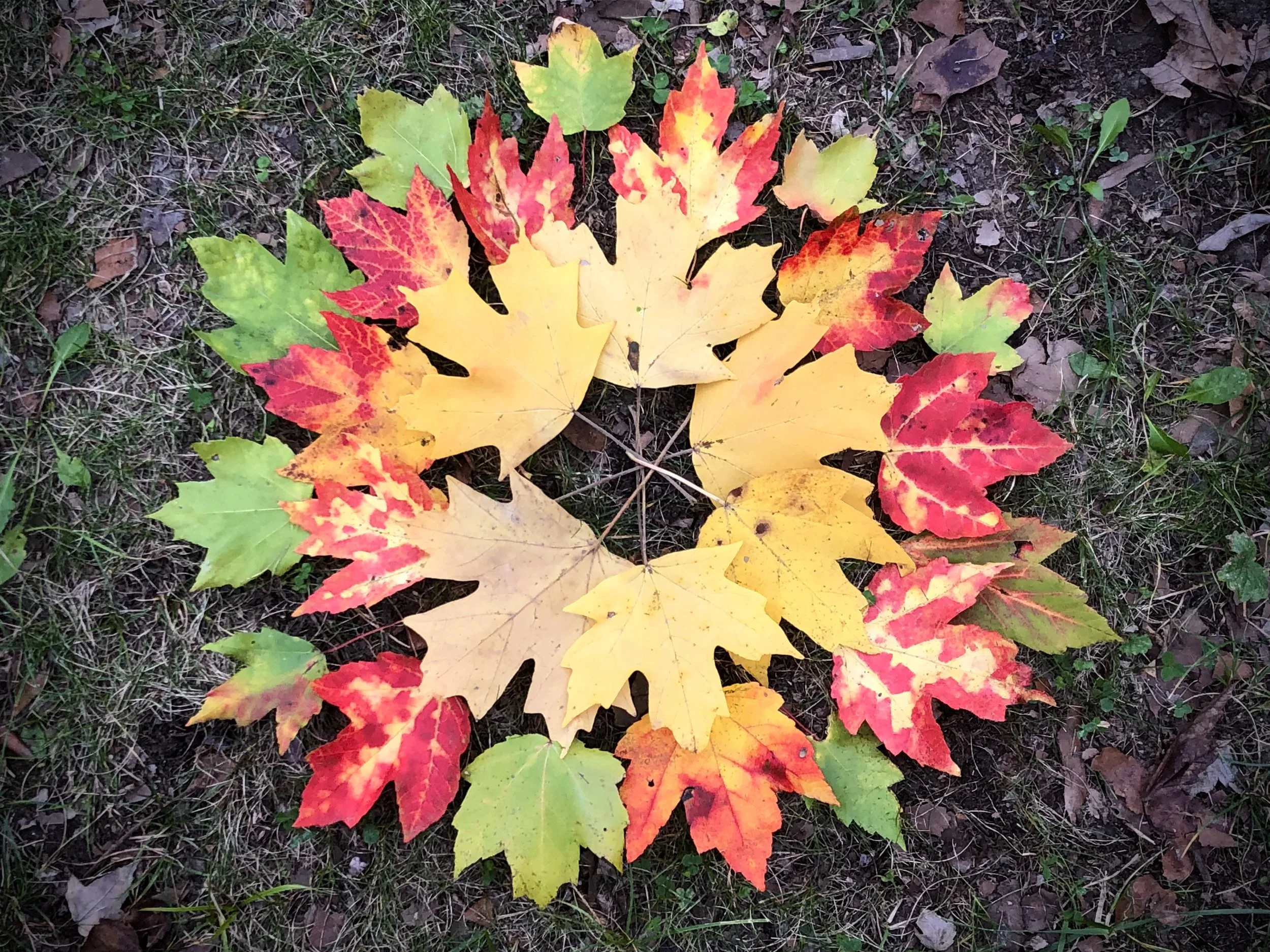
leaf art by Trish Scheldt taken at Beaver Dam State Park, Illinois; photo courtesy of the artist
Burnout, grief, and big life transitions have a way of shrinking our lives down to obligations. And two of the first things to go are usually creativity and time outside. (Who has time to draw, or to sit in the yard, when there is so much to do?) The irony is that these are two of the very things that can be most helpful.
While my own experience has taught me that creativity is a tide that lifts all ships, I generally don’t offer things to my readers and clients without research to back it up. So, I went looking for what the science actually says. What I found is that the evidence for the arts and the evidence for time in nature, are each substantial on their own (while research that combines the two is newer and a bit thinner). In this article, I'll walk through what we know, what we don't, and how to put it to work in your own life; and, you can draw your own conclusions. (Admittedly, I come to this topic with a little bias. I am an avid hiker and have a garden of my own tucked away here in Kenmore, New York.)
What the Arts Do for Health
In 2019, the World Health Organization's European office published one of the largest evidence-based reviews on the benefits of the arts. The report synthesized more than 900 publications, including over 200 reviews that covered more than 3,000 individual studies. It found that the arts can affect both mental and physical health, with roles in preventing illness, promoting health and wellness, and managing and treating physical and mental health (including even trauma) across our lifespans (Fancourt & Finn, 2019). Still, the overall message is consistent. Creative practice is less a luxury and more a resource worth developing and protecting.
What Time in Nature Does
Now let's turn to the outdoors. A 2019 study published in Scientific Reports analyzed data from nearly 20,000 people in England. Compared with people who had no contact with nature in the previous week, those who spent at least 120 minutes in natural settings had significantly higher odds of reporting good health and high wellbeing. For people with 120 to 179 minutes, the odds of reporting good health were about 1.6 times higher still, and the odds of reporting high wellbeing were about 1.2 times higher (White et al., 2019).
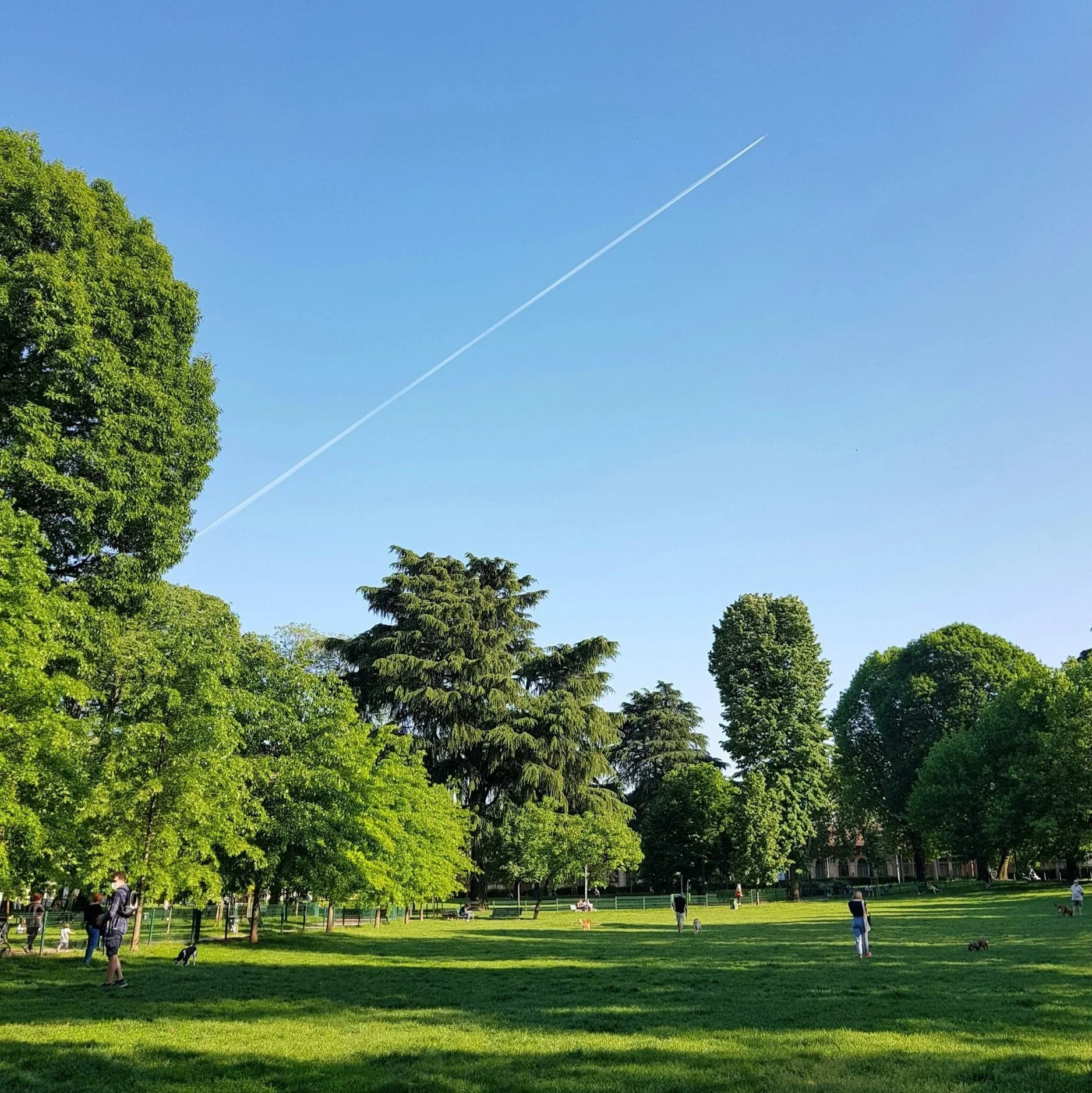
For the study, most nature visits took place within two miles of home, so a local park counts!
A few details make this finding especially useful. The benefits peaked between 200 and 300 minutes per week, with no additional gain beyond that. It didn't matter whether the time came in one long visit or several shorter ones. And most nature visits took place within two miles of home, so a local park counts (White et al., 2019). Less than two hours a week did not show the same association. And, time in one's own yard wasn't counted as contact with nature in that study. Interestingly (particularly given my previous article about our circadian rhythms), time outside also tends to mean time in daylight, it may support your sleep as well (you can read about that here).
Where Art and Nature Meet
A well-known 2012 study followed 56 adults on multi-day Outward Bound backpacking trips that involved no electronic devices. Participants who took a creative problem-solving test on the fourth day of their trip scored about 50% higher than a separate group that took it before their trips began (Atchley et al., 2012). The authors suggest that natural settings offer gentle, low-arousing stimulation that lets our attention system recover, although they also noted that the outcomes may also have been influenced by the lack of electronics as well (Atchley et al., 2012). Personally, my sense is that the two go hand in hand and their individual benefits compound each other.
When it comes to making art outdoors, a 2025 review examined nature-based art therapy, (therapeutic engagement with creative arts led by a professional art therapist using natural settings or materials). It identified 11 publications, across which areas of focus included stress and emotional regulation, attention and focus, creative thinking, social connection, self-discovery, and managing trauma and grief (Gulbe et al., 2025). The authors describe promising benefits, warranting larger randomized trials (Gulbe et al., 2025). And, while this review focuses upon art therapy, findings certainly uphold the idea that engagement with the arts—especially outside can be deeply beneficial to our wellbeing.
Gardening: Creating With Living Things
It’s not really art per se, but gardening is creative and backed with substantial research. A meta-analysis of 22 studies on gardening, including home gardening, community gardening, and horticultural therapy, found a significant positive effect on a range of health outcomes. Wellbeing benefits were substantial and included significant physical health benefits, and patients and people in horticultural therapy programs tended to benefit the most (Soga et al., 2017).
That much makes sense, and in many ways feels like long accepted wisdom mixed with common sense. You are designing, shaping, nurturing, and waiting, and you're doing it outside, in the daylight, with your hands busy and your mind (with luck) quieter. And you literally get to enjoy the fruits of your labor (especially if you’re growing fruit trees or berry bushes).
Much of the research linking arts in nature to wellbeing is correlational. And much of it also seems depend on intention. If your intention is to engage in some kind of artistic or creative endeavor while outside in a natural setting as a way to find some catharsis, process stress, and cultivate greater peace and wellness, then you are likely on the right track (as illustrated in the more therapeutic studies). Engaging in the arts while outdoors is, in many ways the perfect synthesis of many wellness strategies. Creativity decreases stress and helps process emotion. Being outdoors boosts physical wellbeing. Doing it all with intention deepens and directs those benefits in helpful ways.
And, it's also low risk, low cost, and enjoyable, which is a pretty good profile for any wellness practice. It just seems like a win-win.
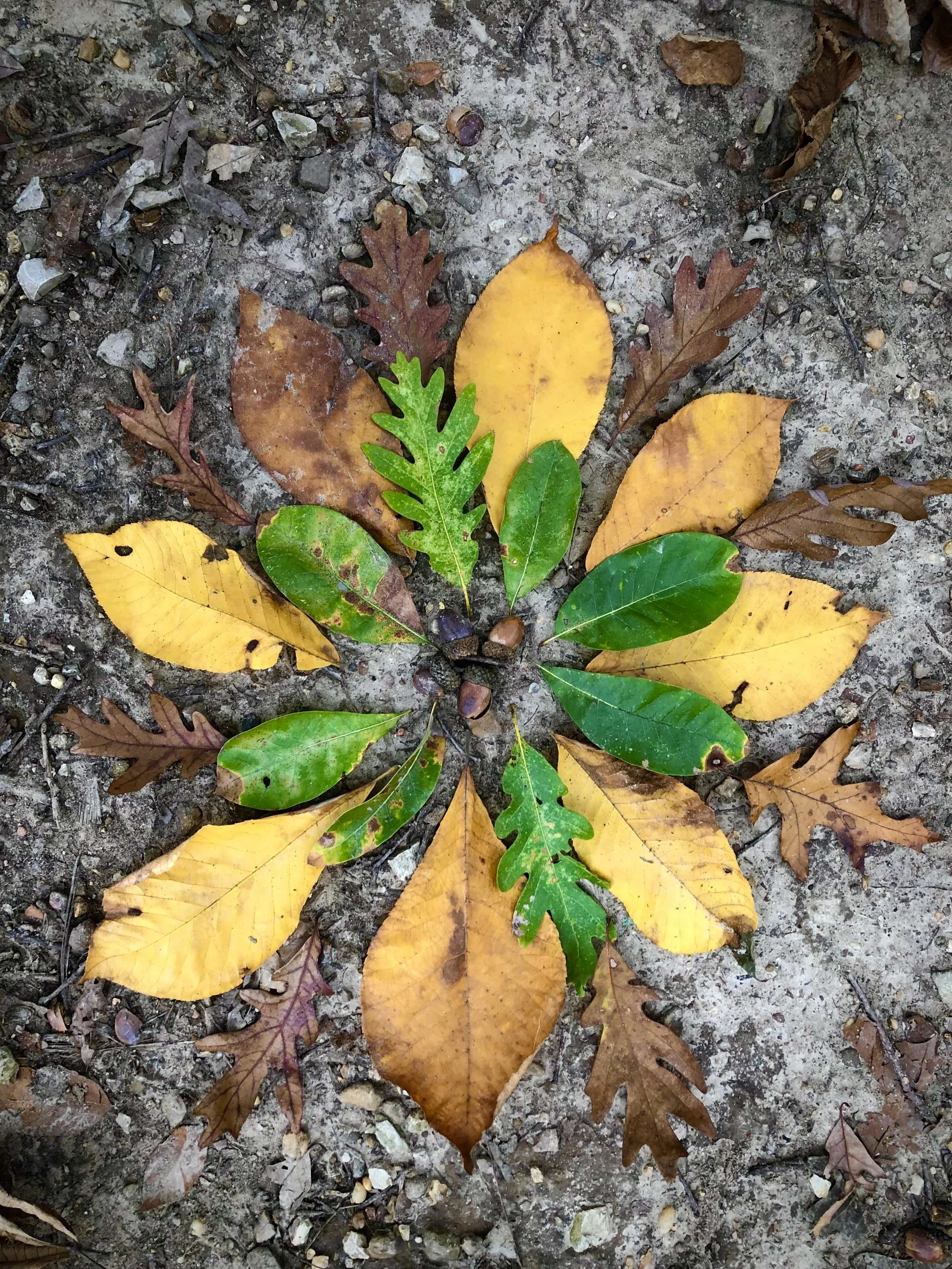
leaf art by Trish Scheldt taken at Beaver Dam State Park, Illinois; photo courtesy of the artist
How to Start
If you'd like to experiment, here are some things to try or start with:
Aim for about two hours a week outdoors. Spread it out however you like. Several short visits count just as much as one long one (White et al., 2019).
Make something, don’t worry about your skill or ability. Sketch what you see, take photographs, write a few lines of poetry, or arrange leaves and stones. The programs in the research used all of these, from drawing and photography to crafting with natural materials (Gulbe et al., 2025).
Leave the phone behind, if you can. The creativity study involved unplugging as well as time outdoors (Atchley et al., 2012).
Plant something. A pot of herbs on a step counts. So does a corner of a community garden (Soga et al., 2017).
Make it about the process, not the product. Remember, no one is judging this. It’s an expression of you in a moment—the creating counts as much if not more than the creation.
Try it with others. Many of the outdoor programs in the surveyed research were held in groups, and researchers noted benefits in social connection and support (Gulbe et al., 2025).
And if getting outside is difficult for you, because of weather, mobility, or energy, there are options. Some research notes that even drawing a landscape or looking at nature through a window can offer a connection when direct contact isn't possible (Gulbe et al., 2025).
A Closing Thought
If there is one thing I'd like you to take from all this, it's that creativity and time outdoors aren't indulgences to earn once everything else is done. They're basic, accessible practices that the research suggests may support your wellbeing, especially during demanding seasons of life. They aren't a substitute for professional support when you need it, but they can be a meaningful part of the picture.
If you're navigating burnout, grief, a major life transition, or sleep that just won't cooperate, you don't have to figure it out alone. My work is built around whole-person support, with no stigma and no clinical detachment, and I'd be glad to help you explore what that could look like for you. I work with clients in person across Western New York and online, and you're welcome to schedule a free introductory call. And as always, I am here to help you get the support you deserve.
Be well.
Adam Scheldt is a holistic counselor, CBT-I sleep coach, and rabbi based in Kenmore, New York, serving clients in person and online.
References
Atchley, R. A., Strayer, D. L., & Atchley, P. (2012). Creativity in the wild: Improving creative reasoning through immersion in natural settings. PLoS ONE, 7(12), Article e51474. https://doi.org/10.1371/journal.pone.0051474
Fancourt, D., & Finn, S. (2019). What is the evidence on the role of the arts in improving health and well-being? A scoping review (Health Evidence Network Synthesis Report No. 67). WHO Regional Office for Europe. https://www.who.int/europe/publications/i/item/9789289054553
Gulbe, E., Ozola, A., Vītola, B., Akmane, E., Pacek, J., & Mārtinsone, K. (2025). Exploring nature-based art therapy: A scoping review. Frontiers in Psychology, 16, Article 1522629. https://doi.org/10.3389/fpsyg.2025.1522629
Moula, Z., Palmer, K., & Walshe, N. (2022). A systematic review of arts-based interventions delivered to children and young people in nature or outdoor spaces: Impact on nature connectedness, health and wellbeing. Frontiers in Psychology, 13, Article 858781. https://doi.org/10.3389/fpsyg.2022.858781
Soga, M., Gaston, K. J., & Yamaura, Y. (2017). Gardening is beneficial for health: A meta-analysis. Preventive Medicine Reports, 5, 92-99. https://doi.org/10.1016/j.pmedr.2016.11.007
White, M. P., Alcock, I., Grellier, J., Wheeler, B. W., Hartig, T., Warber, S. L., Bone, A., Depledge, M. H., & Fleming, L. E. (2019). Spending at least 120 minutes a week in nature is associated with good health and wellbeing. Scientific Reports, 9, Article 7730. https://doi.org/10.1038/s41598-019-44097-3